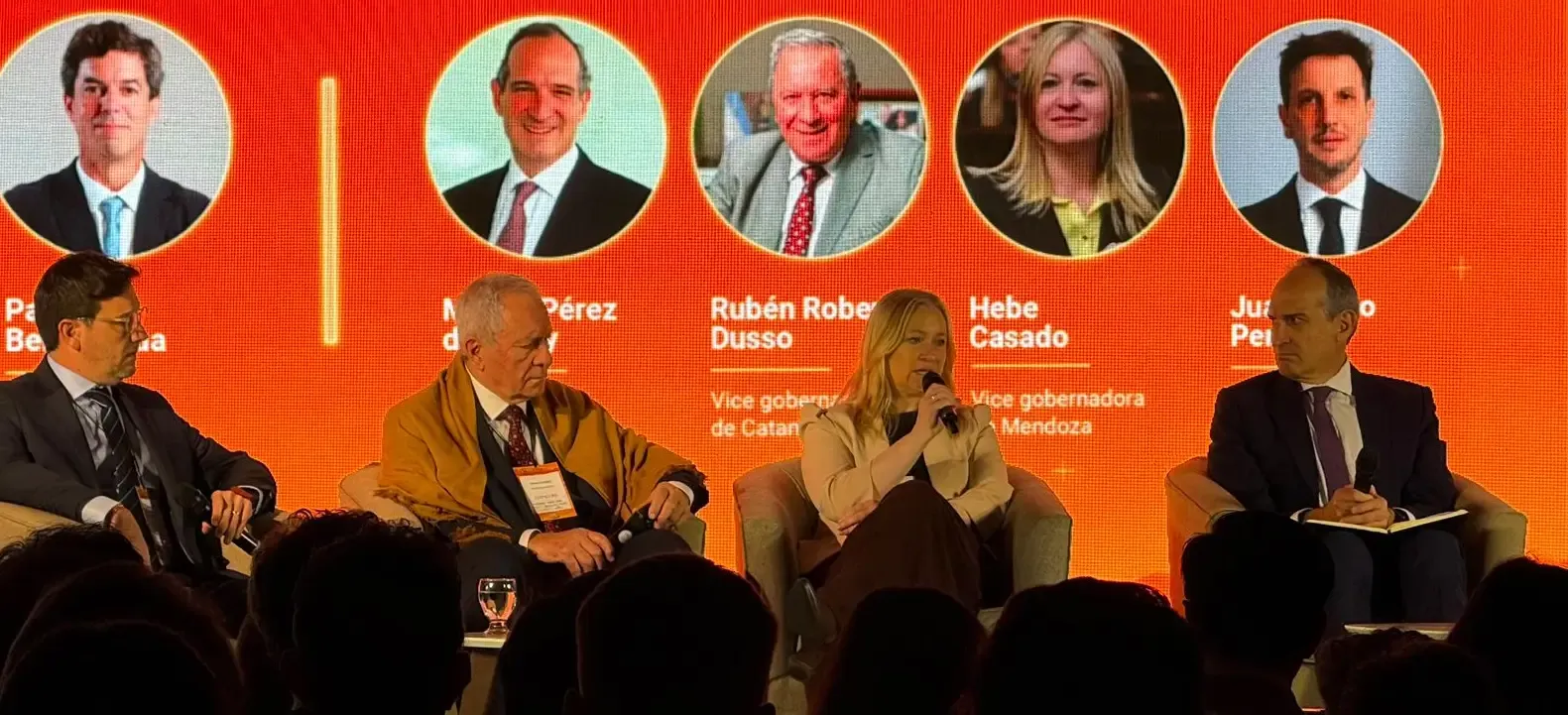
Catamarca Vice Governor Rubén Dusso took part in Engineering Week 2026, organized by the Argentine Center of Engineers (CAI) in Buenos Aires, where he spoke at the Federal Mining Panel under the theme “Mining as a Federal Challenge.”
By Panorama Minero
During his presentation, Dusso argued that mining should be understood as an activity capable of generating infrastructure, connectivity, employment and supplier development, while emphasizing the need for provinces to play an active role in decision-making related to the sector.
"Mining is not only about extraction; it must also generate real infrastructure, connectivity, quality employment and opportunities for our local SMEs," he said.
Three Decades of Lithium Mining
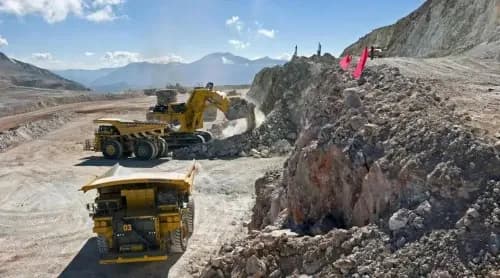
During his remarks, the vice governor reviewed the evolution of mining activity in Catamarca and noted that next year will mark 30 years since the start of lithium production at the Fénix Project, currently operated by Rio Tinto.
Dusso contrasted the current situation with the one he said the province faced in 2011.
"At that time, mining was operating on autopilot; there was no clear plan for managing the resources and society did not feel part of the process. We worked to change that reality through concrete actions. Today the situation is very different: people are involved," he stated.
Workforce Development and Local Suppliers
Another key topic was workforce training and supplier development.
According to Dusso, the province has implemented various initiatives aimed at addressing the demand for skilled labor required by the mining industry.
In that regard, he highlighted that more than 600 Catamarca-based suppliers participated in a recent event organized together with mining companies.
Exploration and New Investment Incentives
Dusso also addressed the investment environment and the need for tools that support projects during their early stages.
During his presentation, he stressed the importance of advancing the proposed New Investment Incentive Regime (RINI), an initiative promoted by several Argentine provinces to complement existing frameworks and support exploration and early-stage development activities.
"There can be no mining production without exploration. Argentina still needs a better understanding of the potential of its territory, and that knowledge will help reduce the deep regional asymmetries that still exist," he said.
Geothermal Potential in the Puna
On the energy front, the vice governor highlighted Catamarca's geothermal potential.
According to Dusso, the area between Antofagasta de la Sierra and Tinogasta contains more than 250 volcanoes, and several studies have identified geological conditions that could support geothermal energy generation projects.
He argued that the integration of mining, energy and infrastructure will be one of the region's key development challenges in the years ahead.
Regional Integration
Toward the end of his presentation, Dusso emphasized the importance of interprovincial cooperation as a way to strengthen regional development strategies.
In that context, he referred to the Lithium Roundtable, composed of Catamarca, Salta and Jujuy, and the Copper Roundtable, which brings together Mendoza, San Juan, La Rioja, Catamarca and Salta.
According to Dusso, these forums help coordinate shared agendas and strengthen the provinces' role in matters related to mining development.