The Consumer Electronics Show 2025, held from January 7 to 10 in Las Vegas, reaffirmed its position as the global epicenter of technological innovation.
By Panorama Minero
Renowned for unveiling disruptive advancements, CES 2025 showcased how artificial intelligence (AI), electrification, and sustainability are reshaping key sectors—from consumer goods to large-scale industries. While these innovations impact daily life, their implications extend deeply into areas like mining and energy transition, vital for Argentina's economic and environmental development.
Insights from CES 2025
Panorama Minero attended CES 2025 to explore firsthand the latest innovations and their potential influence on the mining and energy industries. The event offered a direct analysis of global trends and their applicability to local contexts, which, compared to leading nations in technological adoption, still have significant room for growth.
Key highlights from CES 2025 included:
● NVIDIA and Artificial Intelligence: NVIDIA launched its GeForce RTX 50 GPU series powered by the Blackwell chip, along with new AI tools like Cosmos, capable of generating hyper-realistic videos and optimizing industrial processes. Additionally, its Project DIGITS supercomputer marks a milestone in high-performance computing for developers.
● Sony and Electric Mobility: In collaboration with Honda, Sony unveiled the Afeela 1, a high-tech electric vehicle that underscores the growing trend toward electrification in transportation, a pillar of the energy transition.
● Hisense and Sustainable Technologies: Hisense introduced the UX Trichroma TV, an RGB LED-lit television designed to reduce energy consumption compared to current OLED screens.
These innovations highlight the dominant trends of AI integration and electrification, with applications extending beyond small-scale or domestic uses to industrial sectors, including mining and clean energy production. Given the global focus on efficiency and sustainability, these developments attract the attention of companies and governments striving to maximize potential while reducing environmental impact.
Technology and Mining: A Symbiotic Relationship
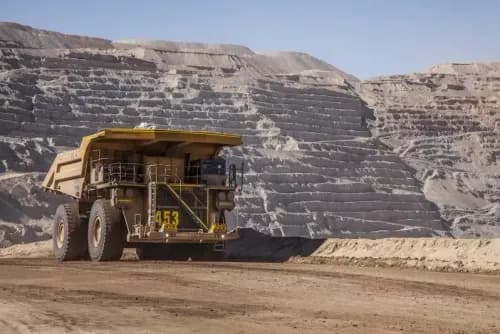
Mining plays a critical role in technological advancement. Materials such as lithium, copper, and rare earth elements are essential for producing batteries, chips, and advanced electronic devices. Conversely, the technologies showcased at CES are pivotal in improving the efficiency and sustainability of mining operations. This creates a feedback loop between the two sectors.
For instance, NVIDIA’s GPUs and AI platforms not only revolutionize data processing in mining but also enhance resource exploration through advanced geological analysis. These tools reduce costs and improve safety by automating hazardous tasks and predicting geotechnical risks with greater precision.
In Argentina, one of the world’s leading lithium producers, the link between mining and technology is critical. The growing demand for lithium, driven by the transition to electric vehicles and renewable energy systems, places the country at the center of the global sustainability map. Mining companies stand to benefit significantly from adopting technological solutions like those presented at CES to boost production and minimize environmental impact.
Modernizing Mining: An Essential Challenge
Despite its foundational role in supporting global technological progress, the mining industry is undergoing a transformation to shed outdated practices. Modernizing processes and building the mines of the future is an unavoidable challenge involving all stakeholders: companies, communities, academia, and governments. Advanced technologies such as smart sensors, robotics, and real-time data analytics could soon be integrated to create safer, more efficient, and interconnected operations.
Electrification and Energy Transition: A Future That Relies on Mining
Advances in electric vehicles, like Sony's Afeela 1, and energy storage solutions are redefining global energy consumption. However, these innovations depend on robust and sustainable supply chains for critical minerals. Copper is essential for renewable energy infrastructure, while lithium, nickel, and cobalt form the backbone of high-performance batteries.
In this context, mining must evolve to meet the sustainability standards demanded by both governments and consumers. Technologies like advanced sensors and automation, as showcased at CES, are crucial for reducing energy and water consumption in mining operations—two scarce and valuable resources in regions like northwestern Argentina.
CES: A Mirror of the Future
CES not only displays consumer devices but also serves as a window into trends shaping future industries. For countries like Argentina, where mining and energy transition are strategic sectors, events like these are essential for identifying innovation opportunities and fostering international collaboration.
Adopting disruptive technologies is no longer optional but necessary to remain competitive in a world moving toward decarbonization and efficiency. The convergence of technology, mining, and sustainability represents not just the future but also a chance for Argentina to lead global change from the southern cone.