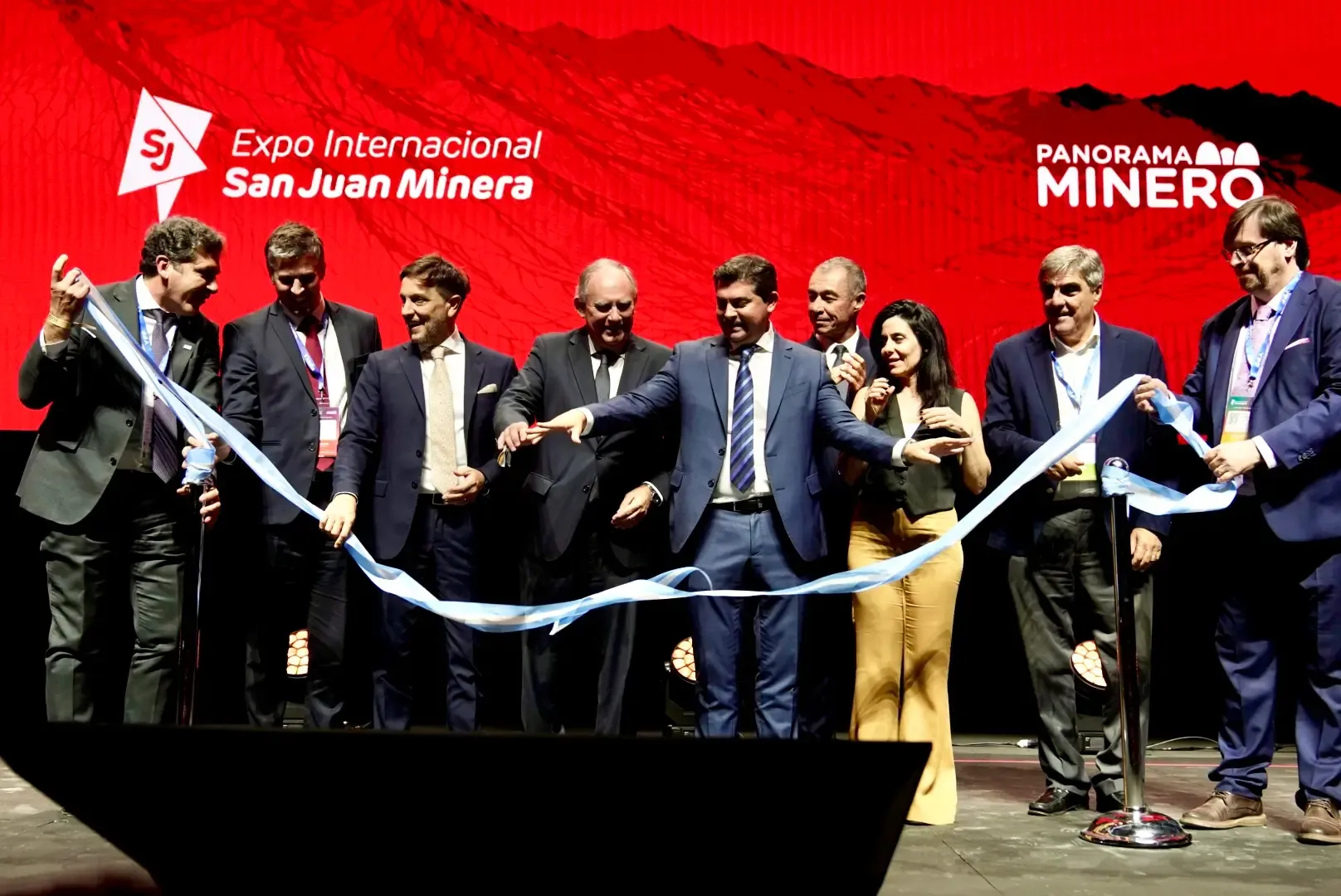
Expo San Juan Minera 2026 began with the participation of ambassadors, trade attachés, and authorities from various provinces, consolidating the region as a global-scale business center. During the opening ceremony, Alejandro Colombo, Editorial Director of PANORAMA MINERO, highlighted that the event reflects two decades of sustained growth and a strong commitment to the hiring of local suppliers. Meanwhile, Argentina’s Secretary of Mining, Luis Lucero, celebrated the industry’s evolution and the joint work carried out through the Copper Roundtable to attract international capital.
Governor Marcelo Orrego emphasized that mining is an economic pillar representing the vast majority of local exports. He pointed out that copper and lithium are critical minerals for the global energy transition, and that the implementation of the RIGI, together with legal certainty, has created the necessary environment to transform mining potential into real opportunities.
By Panorama Minero
The province of San Juan formally launched Expo San Juan Minera 2026, an internationally significant event organized by Panorama Minero that positions the province as the mining epicenter of the Southern Cone. The opening ceremony featured strong institutional participation, including ambassadors and trade attachés from various nations that identify Argentina’s mining potential as a key opportunity for investment and business exchange. The event also brought together authorities from the country’s main mining provinces and representatives from jurisdictions that, while not hosting metal mining operations play a key role as suppliers of goods and services to the industry.
During the opening, Panorama Minero’s Editorial Director, Alejandro Colombo, emphasized San Juan’s role as a development hub attracting global-scale investment. He reviewed the history of the exhibition, which has been held continuously since 2006, while also highlighting the profound economic and social impact mining has had on the province over the past two decades. In his view, this growth is reflected in the strengthening of the local value chain, where the procurement of goods and services has reached high levels, consolidating an inclusive development model.
For his part, Argentina’s Secretary of Mining, Luis Lucero, offered a retrospective view of the sector’s evolution. The national official recalled how mining meetings evolved from small gatherings thirty years ago into today’s world-class massive events. Lucero expressed pride in Argentina’s international positioning and thanked the work carried out with provincial teams—especially through the Copper Roundtable—to achieve regulatory and operational advances that allow foreign investors to arrive with a perspective of shared prosperity.
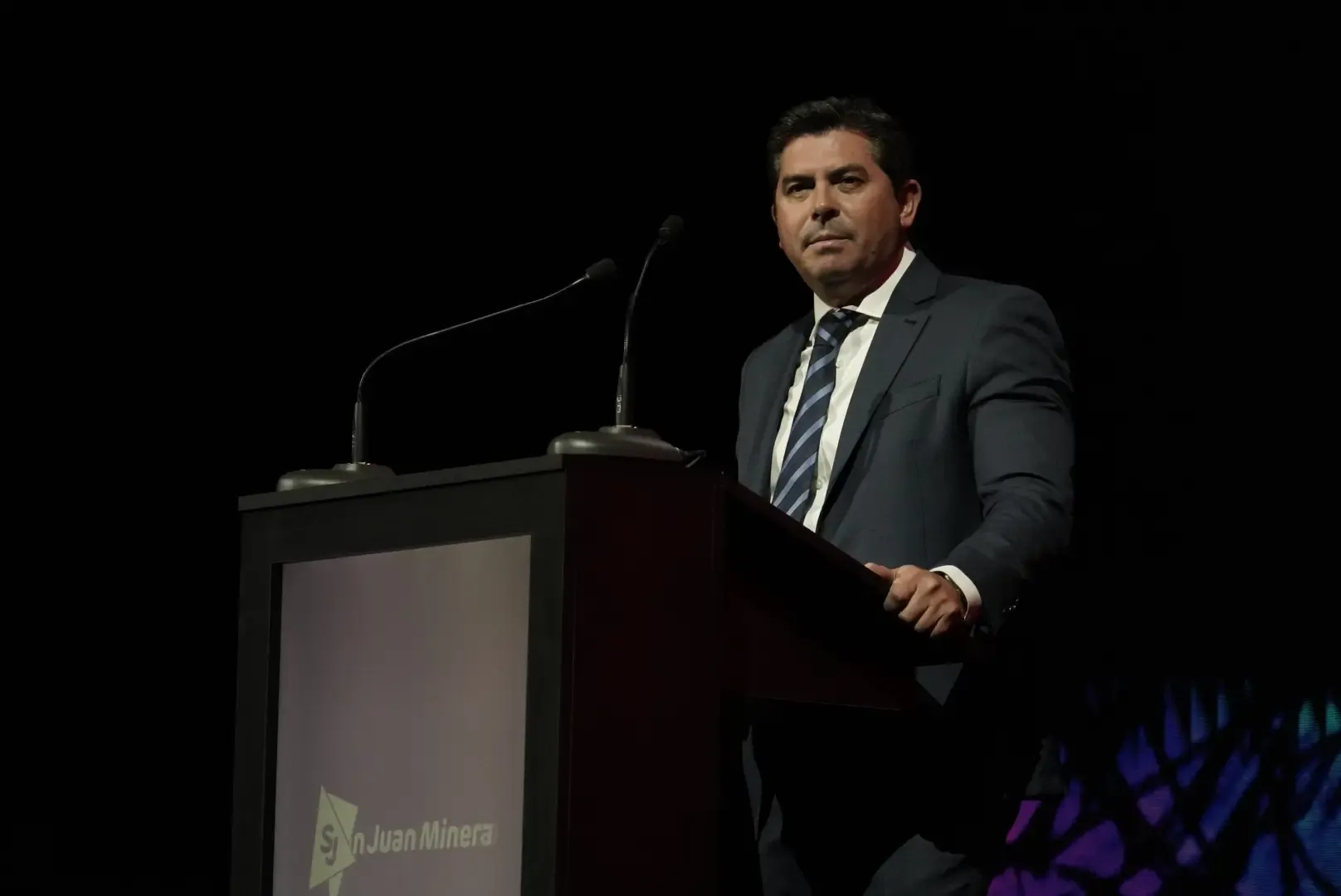
The central focus of the day was Governor Marcelo Orrego’s speech, in which he defined mining as a non-negotiable State policy for San Juan. The governor detailed the scale of the fair, which covers 18,000 square meters and includes the participation of 450 companies, reflecting a massive joint effort by both the public and private sectors. Orrego stressed that the province must rise to the challenges of the global energy transition. He explained that worldwide demand for critical minerals such as copper and lithium has grown exponentially and underlined that San Juan holds a significant share of copper reserves, which are vital for the development of clean energy technologies.
Orrego also emphasized the creation of a favorable business climate through tools such as the RIGI, fiscal stability, and legal certainty—conditions demanded by the private sector and international capital seeking to invest in Argentina. He noted that the national administration has worked to reduce uncertainty through the clarification of environmental regulations, such as the Glacier Law, and the removal of economic restrictions such as currency controls, transforming administrative preparedness into concrete investment opportunities. For the governor, mining not only represents 80% of provincial exports, but also acts as a driver for secondary industries such as metalworking throughout the country.
Finally, the governor highlighted the value of federal coordination, exemplified by the Copper Roundtable and the Federal Roundtable, where provinces with different productive realities—such as Córdoba and Mendoza—work together to design long-term policies.