The strategy seeks to integrate the productive hubs of northern Salta with the international crossings to Chile, Paraguay and Bolivia, in a context where the mining industry requires greater logistical capacity to sustain export growth.
By Panorama Minero
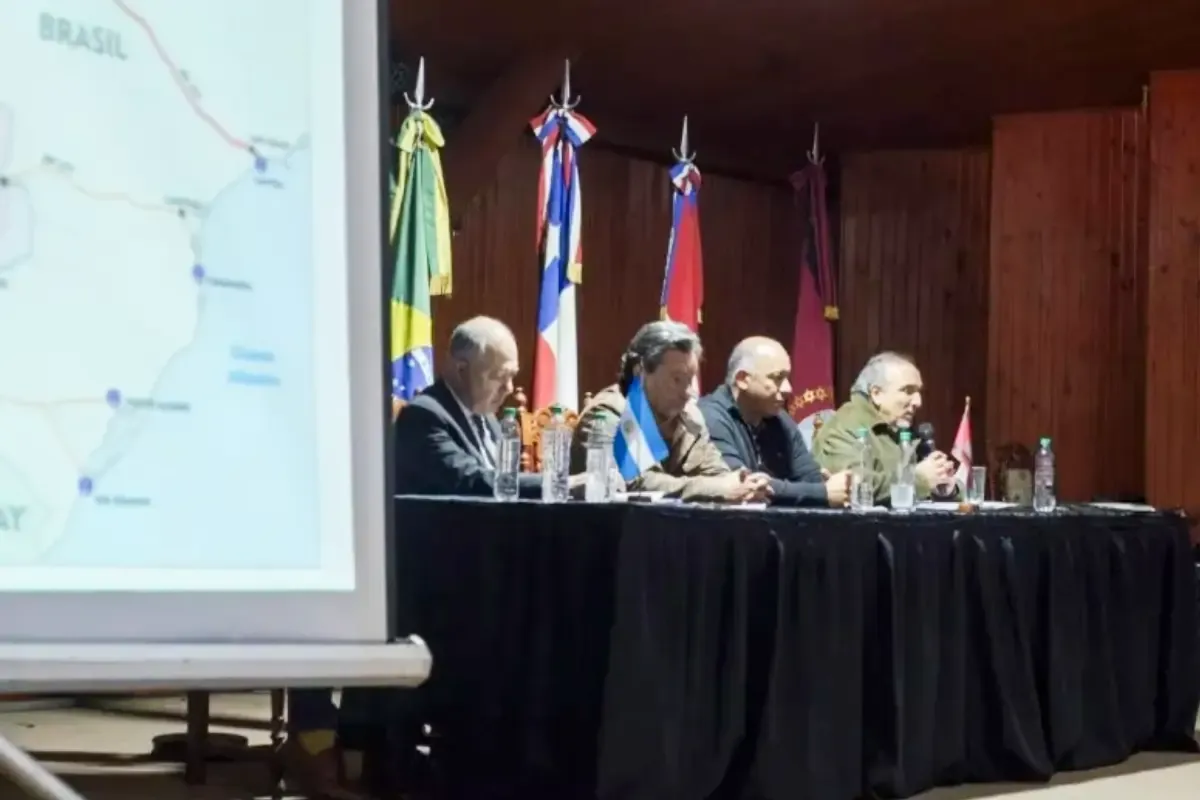
Within the framework of the Second Meeting of Mayors and Business Leaders of Northern Salta of the Capricorn Bioceanic Corridor, provincial officials, private sector representatives and productive sector stakeholders reviewed the progress of the regional integration strategy promoted by the Province to strengthen connectivity and economic development in northern Salta.
The construction of Provincial Route 54 toward Misión La Paz, improvements along National Routes 34 and 51, the modernization of the Salvador Mazza border crossing, and the upgrading of the General Mosconi Industrial Park form part of an infrastructure network designed to connect the productive and mining projects of Northwestern Argentina (NOA) with ports on the Pacific and Atlantic oceans.
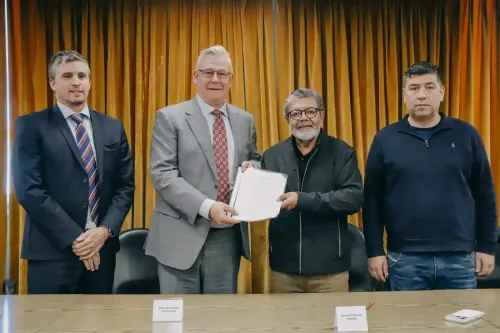
During the meeting, the Minister of Economy and Public Services, Roberto Dib Ashur, together with the Minister of Production and Mining, Ignacio Lupión, presented the main infrastructure investments aimed at consolidating Salta as a regional logistics hub.
Among the projects highlighted is the construction of the section of Provincial Route 54 connecting to Misión La Paz, on the border with Paraguay. According to the provincial government, the Province has secured the resources required to advance the project and plans to tender the complementary works once the international bridge currently being built by Paraguay is completed.
The agenda also includes the new campus of the Provincial University of Administration, Technology and Trades (UPATecO) in Campamento Vespucio, the strengthening of the Salvador Mazza border control post, the upgrading of the General Mosconi Industrial Park, and improvements along several sections of National Route 34, as well as planned works on the Güemes section.
For the mining sector, one of the most significant aspects remains the consolidation of transportation corridors linking projects in the Puna to international markets. In this regard, the provincial government reaffirmed that the strategy includes works on National Route 51, the main access road to Paso de Sico and the ports of northern Chile, as well as the integration of National Route 9/34 between Metán and Rosario de la Frontera to fully incorporate southern Salta into the logistics network.
The corridor forms part of a regional integration initiative connecting territories across Argentina, Chile, Paraguay and Brazil, linking productive centers with port terminals on both the Pacific and Atlantic oceans.
In recent years, Salta has sought to position itself as one of the principal logistics hubs along the corridor through a combination of road infrastructure, border crossings, industrial parks and services associated with the mining industry. Within this strategy, the full operation of Paso de Sico and the pending works on National Route 51 have consistently been identified by mining companies and business chambers as critical elements for improving the logistics competitiveness of mining projects located in the Salta Puna.
The meeting brought together mayors, business leaders, national and international organizations, and representatives of the productive sector with the objective of coordinating actions aimed at strengthening the Capricorn Bioceanic Corridor as a platform for regional integration, investment attraction, and the development of value chains linked to mining, energy, industry and foreign trade.