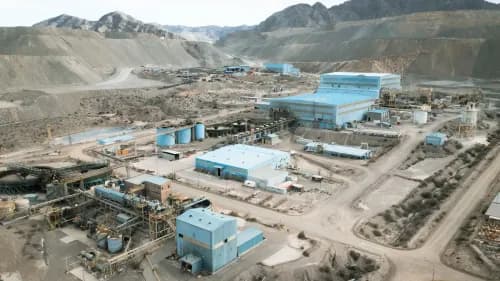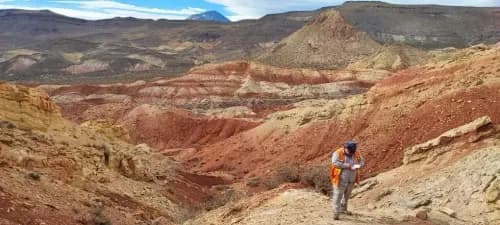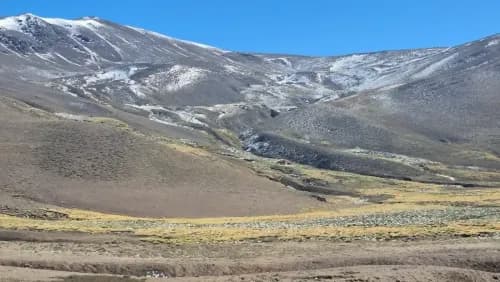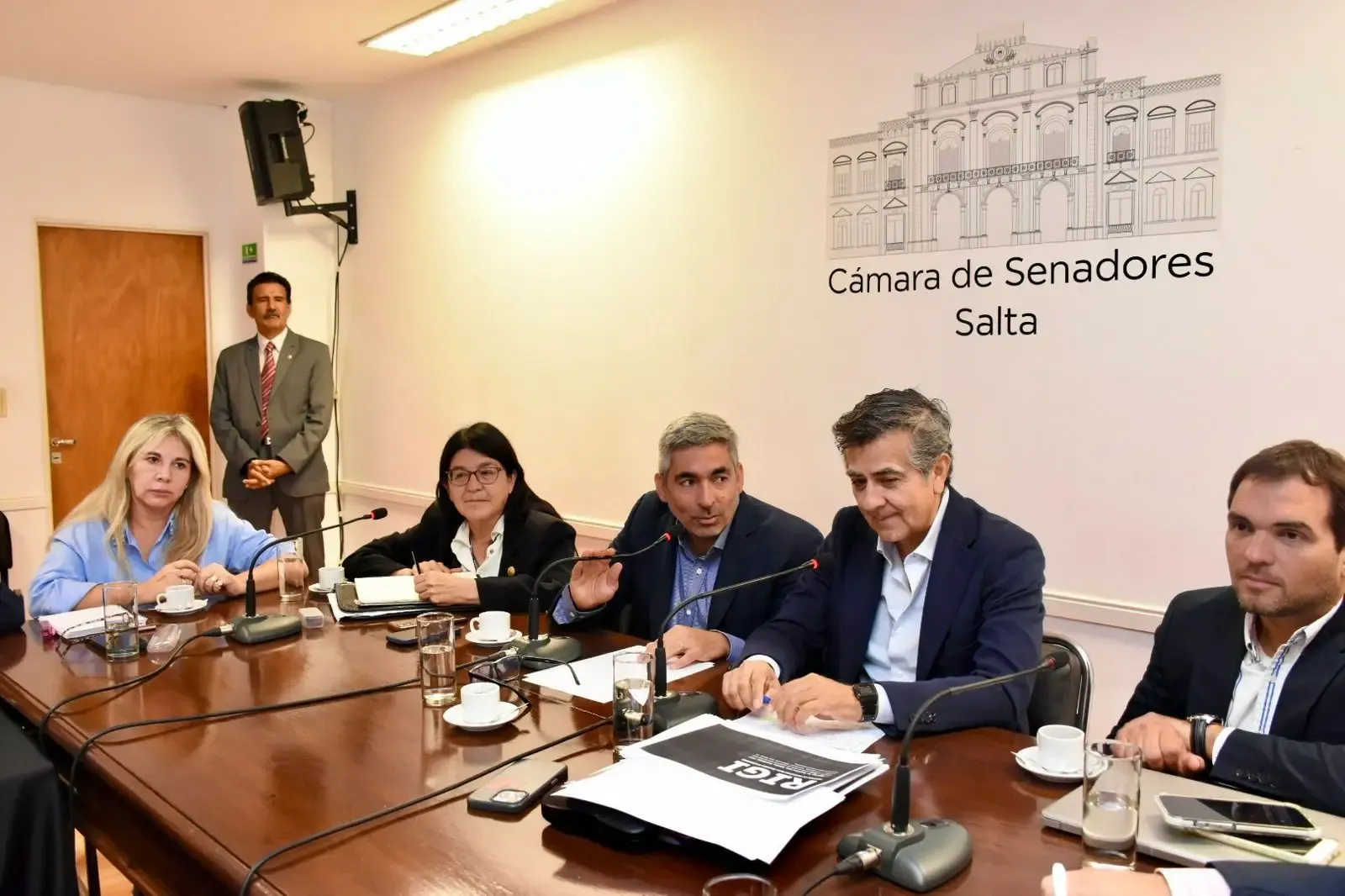
At an extended meeting of the Senate’s Mining Committee, Salta’s Secretary of Mining, Gustavo Carrizo, presented the main sector indicators: 31 Environmental Impact Statements issued in one hundred days, a portfolio of 35 lithium projects, and an expanding metallic mining pipeline. The official strategy combines streamlined permitting, institutional strengthening in the Puna, and coordination with the education system, in a context where only 1% of the potential territory has been explored.
By Panorama Minero
The Mining, Natural Resources, and Environment Committee of the Salta Senate discussed the current situation and projections of the sector, focusing on consolidating a growth model based on administrative streamlining, expansion of exploration, and institutional strengthening. The presentation by the Secretary of Mining, Gustavo Carrizo, delivered a clear message: provincial mining governance is oriented toward reducing timelines, expanding the project base, and organizing territorial development.
In his first one hundred days in office, Carrizo noted that the Secretariat issued 31 Environmental Impact Statements (EIS), a relevant figure in a context where approval speed is a critical variable for investment. He highlighted that the official strategy combines direct engagement with operators and process simplification. He also called on legislators to work on the potential incorporation of initial exploration mechanisms through sworn statements, a practice already implemented in other mining jurisdictions for low-impact stages.
Exploration as a Priority
The structural factor defining Salta’s mining policy is the low level of relative geological knowledge: only 1% of the Puna has been explored. For Carrizo, this explains the central role of exploration in the public agenda.
The Province has a significant Universe of Initiatives:
-
Lithium: 35 projects at different stages — 4 in production, 5 under construction, 2 under evaluation for construction, 3 in pilot phase, and more than 20 in exploration and Pre-Feasibility.
-
Metallic projects (gold, silver, copper): 1 mine in production, 2 projects under evaluation for construction, 7 in advanced exploration, and 15 in early exploration.
In aggregate terms, Salta exceeds 70 active mining projects, with a predominance of exploration stages. This profile aligns with the strategy of expanding the project “pipeline” to ensure future productive developments.
RIGI and Strategic Projects: Scale and Investment
The Large Investment Incentive Regime (RIGI) appears as another governance vector. Carrizo highlighted that six projects are under this framework or in the evaluation process, with investments exceeding US$7.5 billion:
-
Rincón (Río Tinto): US$2.7 billion (already approved)
-
Diablillos (AbraSilver): US$760 million (approved in 2026)
-
Sal de Oro (POSCO): US$633 million (under evaluation)
-
Sal de los Ángeles (Argentina Plasa): US$500 million (under evaluation)
-
PPG (Ganfeng Lithium): US$3.0 billion (under evaluation)
He noted that this set of projects positions Salta within the regional map of strategic lithium investments, with a strong presence of international capital.
Exports and Leadership in Borates
Beyond lithium, the Secretary emphasized that the province maintains leadership in industrial minerals. In 2025, borate exports grew by 35.2%, reaching approximately US$129 million, according to data from INDEC and the provincial Ministry of Production. This segment continues to be a stable component of Salta’s mining matrix.
Governance: Speed, Territory, and Human Capital
The institutional approach presented to the Senate articulates three dimensions:
-
Regulatory agility: issuing EIS in shorter timeframes and the proposal to simplify initial exploration aim to reduce uncertainty in early stages, where geological risk is higher.
-
Territorialization of mining policy: the allocation of a property for the National University of Salta campus in San Antonio de los Cobres strengthens professional training in the Puna aligned with industry labor demands.
-
Training and local employment: legislators emphasized the need to federalize training through universities and institutions such as UPATECO (Provincial University of Administration, Technology, and Trades of Salta), as well as the creation of technical internships. The objective is to align the supply of human capital with the growing demand of the sector.
Social License and Environmental Control
The legislative discussion incorporated critical variables for the sustainability of the model, such as prior consultation protocols with indigenous communities, strengthening social license, regulation of complementary activities such as aggregate extraction, and the application of environmental regulations, including the debate on the Glacier Law.
Infrastructure and Bottlenecks
Although the focus of the meeting was on administrative management, concerns emerged regarding the need to expand industrial infrastructure, particularly in nodes such as General Güemes. These factors are decisive for turning projects into effective production. In this regard, Carrizo emphasized that the Secretariat has strengthened controls on mining routes.