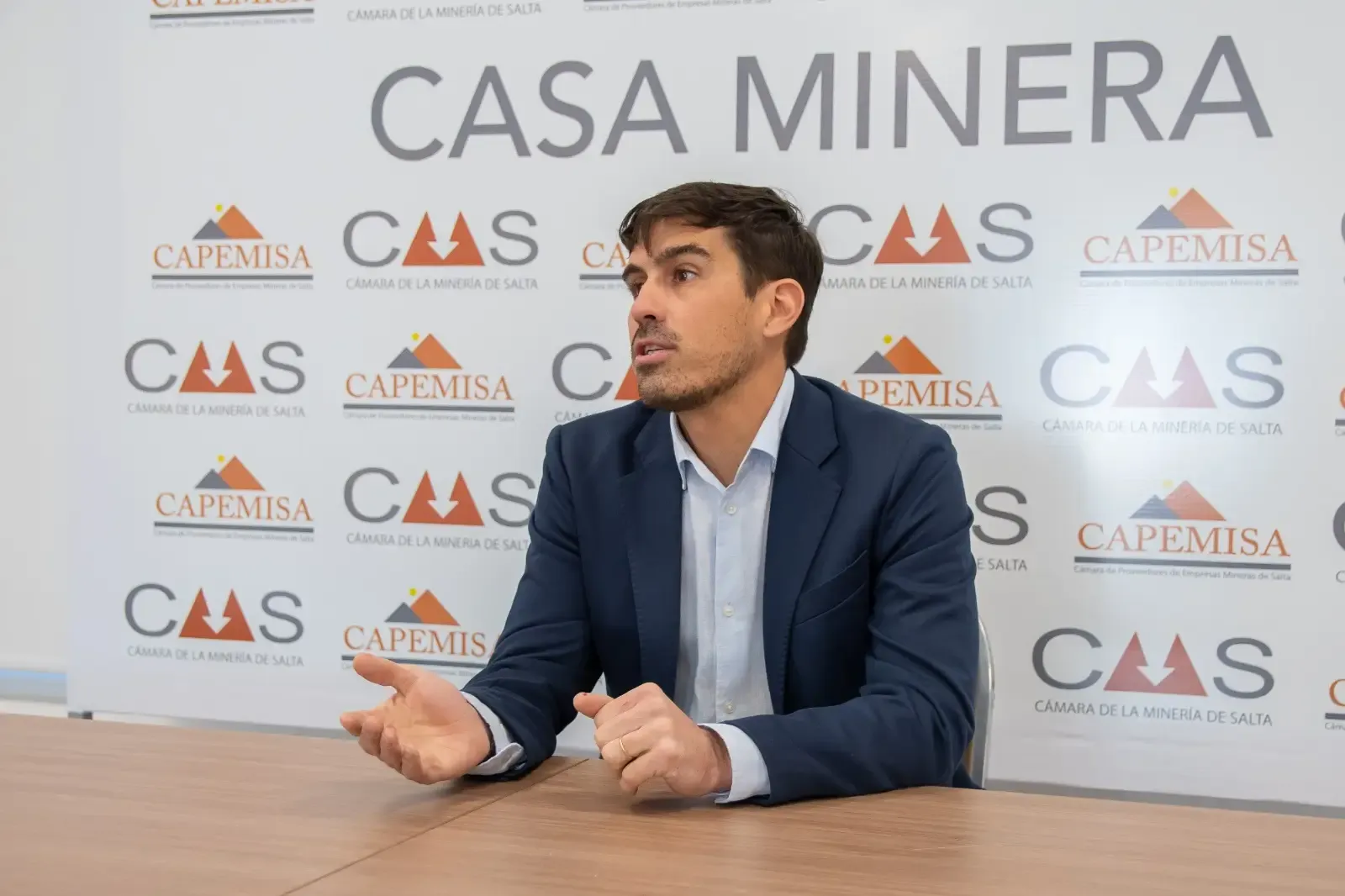
In a conversation with PANORAMA MINERO, Gilly highlighted three central pillars: regulatory predictability, with RIGI as a key tool; fiscal competitiveness compared to other jurisdictions; and the need to accelerate investments in critical infrastructure, especially energy, roads, and connectivity in the Puna. For Gilly, public-private coordination and alignment between the national, provincial, and municipal governments will be decisive to sustain the investment cycle in a sector structurally characterized by long timelines and high exposure to international variables.
By Panorama Minero
Where does mining in Salta stand today and how would you describe the role it plays?
Mining in Salta is currently in a stage of strong positioning. Today, Salta’s society understands that it is a real, strategic, and sustainable productive activity capable of generating formal employment, stimulating regional economies, and transforming communities. Its role is key, as it provides minerals that are fundamental for the energy transition, electromobility, and the technological industry, such as lithium, copper, gold, and silver. At the same time, it is a concrete source of employment, supplier development, and infrastructure generation in the areas where companies operate.
That said, mining has a cyclical nature. It is not a linear activity, and therefore goes through periods of expansion and contraction linked to international variables. For that reason, we speak of a sustained growth process, although with the ups and downs typical of the sector. All of this activity must be developed under rigorous environmental standards. Modern mining cannot be conceived without monitoring, technology, and commitment to environmental and community care.
After a year marked by macroeconomic complexity, what expectations do you have for 2026?
Expectations are strongly conditioned by external variables that do not depend on our country. However, we are moderately optimistic, understanding that expectations must be managed carefully. We see an improvement in lithium prices, gold remains at high levels, and copper and silver show positive prospects. That sends encouraging signals. At the same time, we remain in a volatile macroeconomic context, and the realization of projects depends both on the general environment and on the particular decisions of each company.
In Salta, we expect the consolidation of operating projects such as Mansfield, POSCO, Eramine, and Ganfeng. In addition, Mansfield is advancing with new exploration in Arizaro, Rio Tinto continues the construction of Rincón, and we have expectations regarding projects such as Diablillos from AbraSilver and PPG from Ganfeng in the medium term.
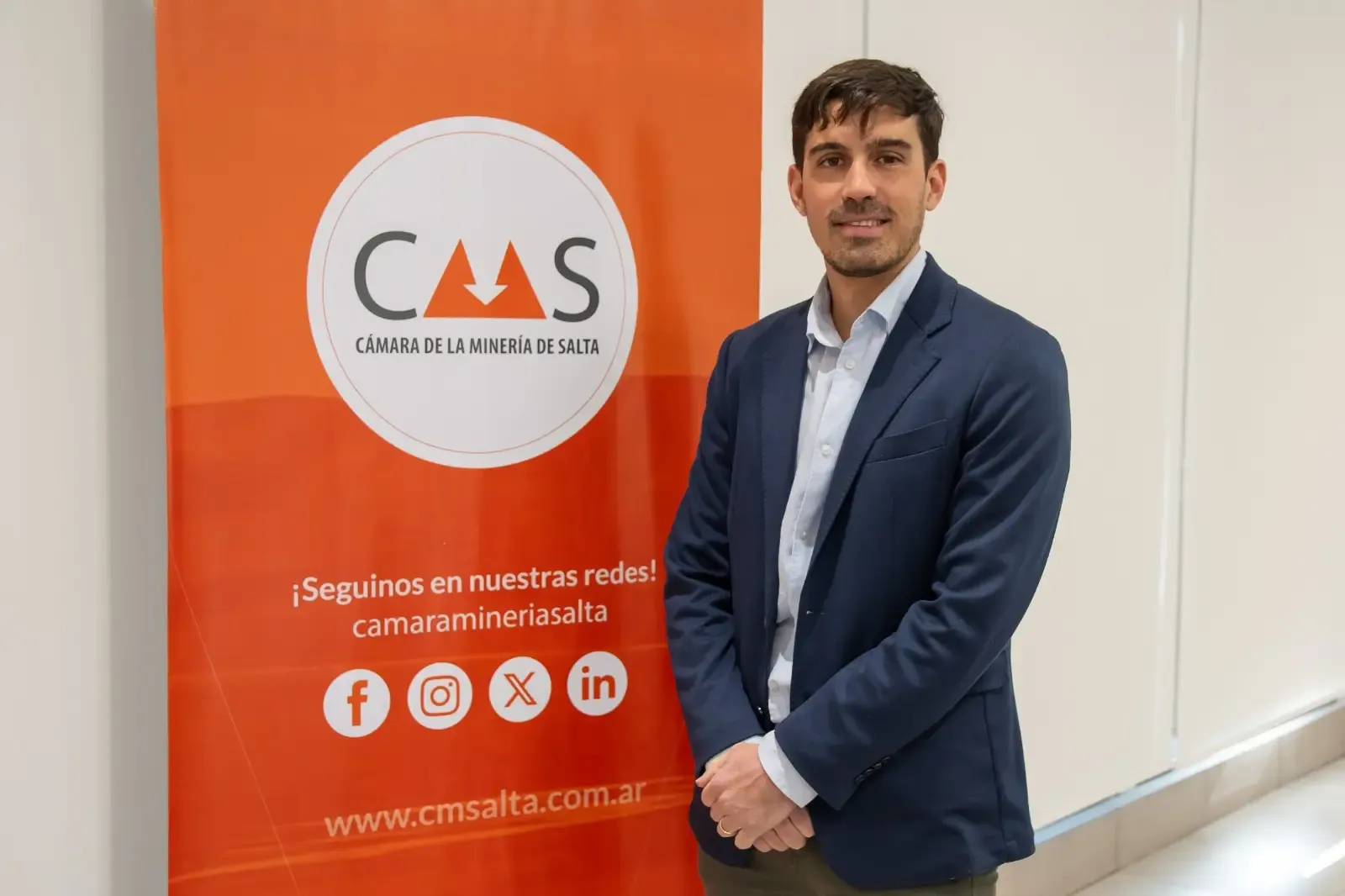
What would you say are the differential factors that explain Salta’s positioning as one of the most attractive provinces for investment?
Salta combines world-class geological resources with highly professional human capital. There is also a supplier ecosystem that has grown in sophistication, technical capacity, and quality standards. This growth was not accidental and reflects a strong local entrepreneurial spirit.
In addition, the provincial government adopted support for mining development as a public policy, understanding its impact on the productive matrix. That combination of resources, human capital, competitive suppliers, and institutional support explains the province’s positioning.
What priorities has the Salta Mining Chamber set in a context of expanding investments?
The Chamber has clear priorities aimed at consolidating sustained and responsible development of the activity. First, it is essential to advance in strategic infrastructure, especially in energy, roads, and connectivity, which are basic conditions to ensure competitiveness and operational safety. We are also working to ensure that permits are granted within reasonable timeframes, providing predictability to investors when making long-term decisions. At the same time, we emphasize the importance of maintaining competitive tax rates compared with other provinces and countries, since the fiscal burden directly affects decisions about where to initiate a mining project.
Another central axis is to permanently strengthen public-private coordination, promoting spaces for dialogue and collaboration that allow challenges to be anticipated and joint solutions to be built for mining and the key issues surrounding it: road infrastructure, energy infrastructure, and training. In this line, we promote training initiatives aligned with the real needs of the sector and we are working strongly to promote in schools the dissemination of modern, responsible, and environmentally committed mining.
Our role is to facilitate, coordinate, and communicate. It is essential to make visible what the activity generates in terms of employment, development, and supply of strategic minerals, while also maintaining realistic expectations, since as I mentioned before, mining is subject to international variables and its evolution is not linear but cyclical.
How has the relationship between the private sector and the provincial government evolved?
The relationship has matured in a positive way. There is a greater understanding of the real contribution of mining to the provincial economy, and we have seen concrete progress in streamlining permits and creating institutional dialogue spaces.
It is a virtuous and very necessary relationship, based on joint work to strengthen the activity within the existing legal and environmental framework.
In addition, we have permanent working group meetings where both mining companies and the Secretariat of Mining present challenges and work together on solutions. There is significant openness from both sides.
What level of predictability do companies currently need in order to move forward with long-term investment decisions?
Mining decisions involve extremely high risk and long timelines, which is why they require legal security, regulatory stability, and clear rules. RIGI represents an important step in that direction, as it seeks to correct Argentina’s historical instability.
However, it should be mentioned that RIGI is a two-year window to enter, and that timeframe is very short for many mining companies. In some projects it is difficult to have engineering developed to the level of detail required to apply to RIGI, and especially to meet the minimum investment thresholds. Of course, we celebrate its existence, but I believe we must think not only about extending it, as was published weeks ago, but also about turning it into a rule rather than an exception. Investors should know that this virtuous instrument that has generated and attracted so many projects could become something permanent, rather than a two-year window after which legal uncertainty returns.
What impact does coordination between the national government, provinces, and municipalities have on the real competitiveness of mining projects?
I believe it is decisive. When the three levels of government are aligned on infrastructure, energy, and long-term policies, a clear signal is sent to the market. Mining requires state policies, not short-term policies. Creating institutional coordination spaces is fundamental to guarantee continuity. It is also necessary to work toward avoiding the implementation of local taxes or charges that may become distortive. This is an issue that must be put on the table.
What impact is mining having on the network of local suppliers and SMEs in Salta?
The impact has been widely positive. In recent years new suppliers have emerged, more job opportunities have been created, and significant work has been done in training processes. Many SMEs invested heavily in machinery and professionalization, and although in the last year they have been operating at around 50% capacity, I see a strong entrepreneurial spirit and willingness to adapt.
The cyclical nature of the sector created difficult moments, but those situations also demonstrated the effort and work of the Salta business ecosystem.
What is still needed for more local companies to integrate sustainably into the mining value chain?
Support must continue to deepen, especially in communities close to the Puna. Mining companies must continue explaining requirements, standards, and processes so they can be understood and implemented. Formalization and training are key to achieving sustained integration.
Significant progress has been made, but we must continue strengthening that inclusion with responsibility and compliance with environmental and technical standards.
Is there room for public-private investment schemes in critical mining infrastructure? In which areas do you see the greatest opportunities?
According to the discussions we have been having within the CMS with different public and private institutions, I believe there is significant room for public-private investment schemes in infrastructure. I see this as a major opportunity.
Law 8.174 allows companies to participate in strategic works through fiscal compensation mechanisms. This could be applied to roads, energy, and critical services for the Puna. The key is to generate clear incentives and transparent mechanisms that allow investment without increasing tax pressure. I also see openness from both provincial and national governments to explore these schemes.
In terms of connectivity and services, what challenges remain to improve operational conditions in high-mountain areas?
The major pending issue is fiber-optic connectivity. Although satellite solutions have appeared in recent years, it is necessary to advance in structural infrastructure. It is also essential to expand 4G/LTE coverage along the routes to the Puna.
Connectivity is not a luxury; for us it is operational safety, environmental monitoring, productive efficiency, and emergency response.