Minera Alumbrera recycled 100% of the mining tires used during its operation

3 mins min reading
Minera Alumbrera recycled 100% of the mining tires used during its operation
Share:

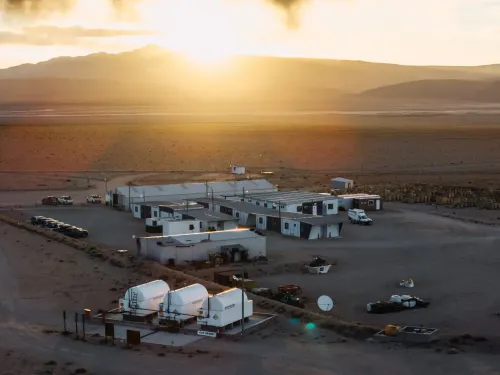
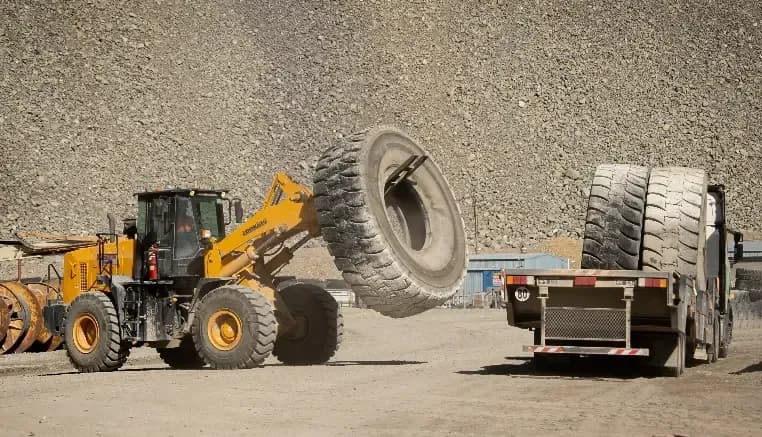
Minera Alumbrera recycled 14,750 tons of end-of-life tires (ELTs) that were used throughout the development of the Bajo de la Alumbrera mine. In this way, the life cycle of these mining materials was given new meaning, as they are now being used in playgrounds and sports fields across the country.

By Panorama Minero

The work began during the closure phase of Alumbrera and recently reached the milestone of having recycled all large mining tires, equivalent to 3,100 units. This environmental achievement is complemented by the final disposal of 70% of light vehicle tires and rubber waste, with the goal of completing the total by the end of 2025.

“This project transforms a potential environmental liability into a concrete opportunity for innovation and local development. This result is part of our commitment to the Mine Closure Plan—approved and supervised by the relevant authorities—which promotes sustainable actions with triple impact for the community,” said Gabriel López Vázquez, Environmental Manager.

The outcome not only has environmental value but also aims to generate economic and social benefits for the province. For example, during Alumbrera’s closure phase, the company supported the development of Newco in establishing a treatment plant in the Belén Department, Catamarca, dedicated to recycling industrial waste. The company also issues the corresponding final disposal certificates.

Thanks to Alumbrera’s support and coordination with public and private stakeholders, this initiative became the first plant in the country dedicated exclusively to recycling end-of-life tires (ELTs) from the mining industry. “We are very pleased to be a key supplier in Alumbrera’s Mine Closure Plan and to provide 100% local employment through the hiring of operational staff in Belén, Andalgalá, and Santa María,” said Andrés Forenza, General Manager of Newco.

All of the company’s employees are local residents, who carry out tasks related to the reduction, recycling, and reuse of used tires. These materials are later transported to an integrated waste treatment center in the province of Santa Fe, where they are transformed into rubber pellets highly valued for their shock-absorbing properties.

Víctor Ríos, Environmental Supervisor, noted that “the plant installed in Belén not only solved a long-standing environmental challenge but also created jobs, opened new production chains, and became a replicable model for the region.”

The ELTs are later used to manufacture everyday products such as granulated rubber, steel, textiles, flooring, tiles, posts, curbs, speed bumps, and drainage systems used in sports fields, playgrounds, and eco-friendly pavements, among others. In this way, waste materials are reintroduced into a productive cycle under the principles of the circular economy, with a regenerative and low-impact approach.

As part of a modern mining model committed to generating local benefits, we promote an approach that closes cycles responsibly and opens new opportunities with social and environmental purpose, in partnership with suppliers that foster local development.
Published by: Panorama Minero

Category: News

Illustrative image for the news: “We see an opportunity driven by the growth of the mining sector” | Panorama Minero

“We see an opportunity driven by the growth of the mining sector”

With extensive operations in Mexico and the United States, Grupo México Transportes outlines how technological evolution, artificial intelligence, and logistical integration are redefining freight rail transport. In conversation with Panorama Minero, its CEO, Bernardo Ayala, explains the scope of these innovations and their potential in Argentina.

Read more

Join our mining community!


Subscribe to our newsletter for exclusive news, insights, and updates on the mining industry and Panorama Minero's latest initiatives.

Illustrative image for the news: Epiroc Accelerates the Transition Toward Smart Mining in the Southern Cone | Panorama Minero

Driven by automation, digitalization and electrification, mining in the Southern Cone is entering a new stage of modernization. Epiroc presented its regional roadmap, highlighting how interoperability, agnostic solutions and people-centered support will be key to accelerating the transition toward more efficient, safe and competitive operations.

Illustrative image for the news: Two Decades of the Country’s Largest Gold-Exporting Operation | Panorama Minero

Celebrating 20 years of uninterrupted production, Veladero stands as a cornerstone of San Juan’s economy and one of Argentina’s most significant mining operations. During Argentina Gold, Silver and Copper 2025, its General Manager reflected on the milestones achieved, the challenges of operating in the Andes, and the long-term commitments guiding the project’s next stage.

Illustrative image for the news: Uranium Gains Appeal Amid the Global Energy Transition | Panorama Minero

In a global context that increasingly demands safe and sustainable energy sources, uranium is once again emerging as a strategic resource. Experts from the nuclear energy sector analyzed its role in the energy transition and emphasized the need to revive domestic production to reduce external dependence.

Illustrative image for the news: “We see an opportunity driven by the growth of the mining sector” | Panorama Minero

With extensive operations in Mexico and the United States, Grupo México Transportes outlines how technological evolution, artificial intelligence, and logistical integration are redefining freight rail transport. In conversation with Panorama Minero, its CEO, Bernardo Ayala, explains the scope of these innovations and their potential in Argentina.

Illustrative image for the news: The Engines of National Growth Point to Greater Complementarity | Panorama Minero

In an exchange that brought together key actors from the country’s productive apparatus, leaders from the mining, industrial, agricultural and energy sectors presented shared assessments on infrastructure, tax burdens, financing and the regulatory framework. The discussion highlighted broad agreement on the need for predictability and reforms that enable sustained growth.