Catamarca holds one of Argentina’s greatest potentials in brine-hosted resources, especially in the Puna region, where hydrogeological systems form natural reservoirs of high value. Historically, this type of lithium has been more extensively developed due to its higher profitability and comparatively lower complexity relative to hard-rock lithium.
Por Panorama Minero
Differentiation between brine lithium and hard-rock lithium: Technical and economic aspects
Regalado emphasized that the distinction between both types of deposits is not only geological, but also economic, environmental, and technological. While brine lithium is extracted through pumping and evaporation ponds allowing scalable production with relatively competitive costs, hard-rock lithium requires more intensive processes such as crushing, grinding, and advanced chemical treatments. These significantly increase both initial capital investments and operating expenses, which is why its development remains at an early stage in the province.
Operating projects and their impact on the productive matrix
Regarding active ventures, the engineer highlighted the historical role of the Fénix project, in operation since 1997 at the Salar del Hombre Muerto, which continues to expand its production capacity under an authorized plan to reach 38,000 tonnes per year of lithium carbonate. Added to this is the Tres Quebradas project, located in Fiambalá, which has already completed key stages of its production process under strict environmental controls and with ongoing monitoring by provincial agencies.
Expansion phases and international market constraints
Regalado explained that the growth of the lithium industry unfolds in progressive phases that respond directly to fluctuations in the international market. The cycles of price increases and stabilization —especially evident during 2024 and early 2025— have produced adjustments in investment schedules, leading to temporary rescheduling of works, without implying any loss of strategic interest on the part of operating companies.
Complexity of the hydrological system and its relationship with the environment
A central point of the report was the detailed explanation of the hydrogeological system of the salars, where freshwater, brine, lagoons, and high-Andean wetlands interact. Regalado noted that it is a dynamic and highly sensitive system in which any intervention must be carefully evaluated, as changes may affect the natural equilibrium of the ecosystem, impacting both biodiversity and traditional productive activities.
Mathematical models and long-term environmental projections
The specialist highlighted the use of mathematical simulation models that allow forecasting the behavior of the hydrological system throughout the entire lifecycle of the projects, including their closure phase. These tools help anticipate impacts, define extraction thresholds, and establish mitigation protocols that ensure responsible resource management over time.
Protection of wetlands and wildlife
Technical evaluations include the preservation of sensitive species such as the Andean flamingo (parina), as well as the conservation of wetlands and peatlands (vegas and bofedales) that play essential ecological roles and are vital for subsistence livestock. Regalado stressed that these areas are continuously monitored through control stations that record hydrological and biological parameters.
Social participation and consultation with local communities
Communities located within the direct area of influence have been incorporated into public consultation processes, contributing territorial knowledge and strengthening participatory monitoring systems. This mechanism has made it possible to adjust environmental management measures and reinforce transparency in decision-making.
Inter-institutional oversight and regulatory framework
Project oversight involves the Ministry of Mining, the Secretariat of Environment, water management agencies, and specialized directorates, forming a control network aimed at ensuring that operations are conducted within environmentally acceptable and technically safe parameters.
Social impact, employment, and territorial transformation
Lithium activity has generated direct and indirect employment in towns such as Andalgalá, Belén, Santa María, and Antofagasta de la Sierra, energizing local economies and promoting social transformation processes, with greater access to services, infrastructure, and technical training.
Social responsibility and community development
Companies have strengthened corporate social responsibility programs related to health, education, and workforce training, helping improve quality of life in traditionally isolated areas and creating opportunities for young people through agreements with educational institutions.
New projects and investment outlook
In addition to projects already in operation, initiatives such as Sal de Vida, Sal de Oro, and Hombre Muerto Oeste are advancing in construction and financing stages, consolidating Catamarca as one of the country’s main lithium hubs.
Protected areas and specific restrictions
Basins like Carachipampa, designated under the Ramsar convention, require additional strategic environmental assessments that condition the development of extractive activities, prioritizing the conservation of these ecologically valuable wetlands.
Exploration and new geological theories
More than 18 projects are currently in the exploration phase, with progress in identifying lithium in non-conventional systems, which broadens the mining horizon and generates new development expectations.
Final outlook and sustainable challenge
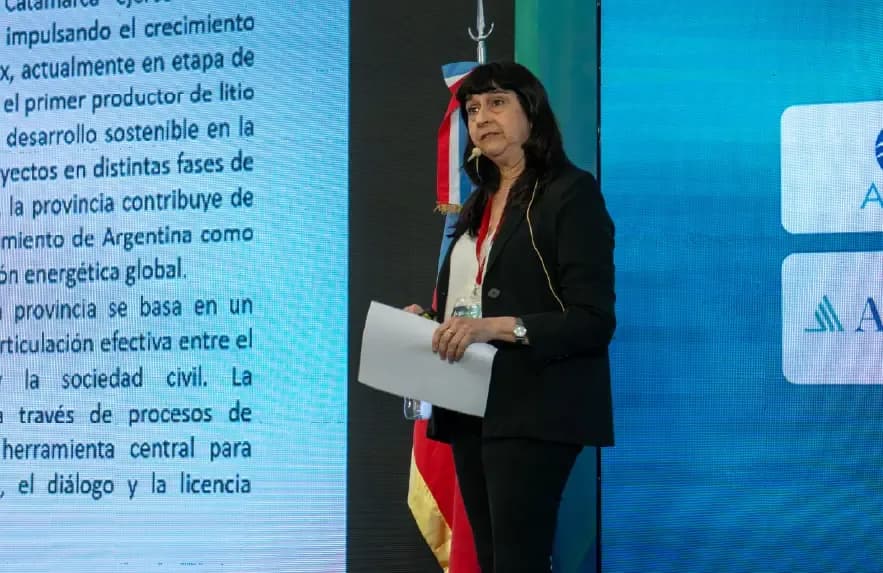
Teresita Regalado concluded that the true challenge will be to maintain a balance between productive growth, environmental oversight, and social acceptance, promoting a model of modern mining that combines economic development with respect for the territory and its communities.