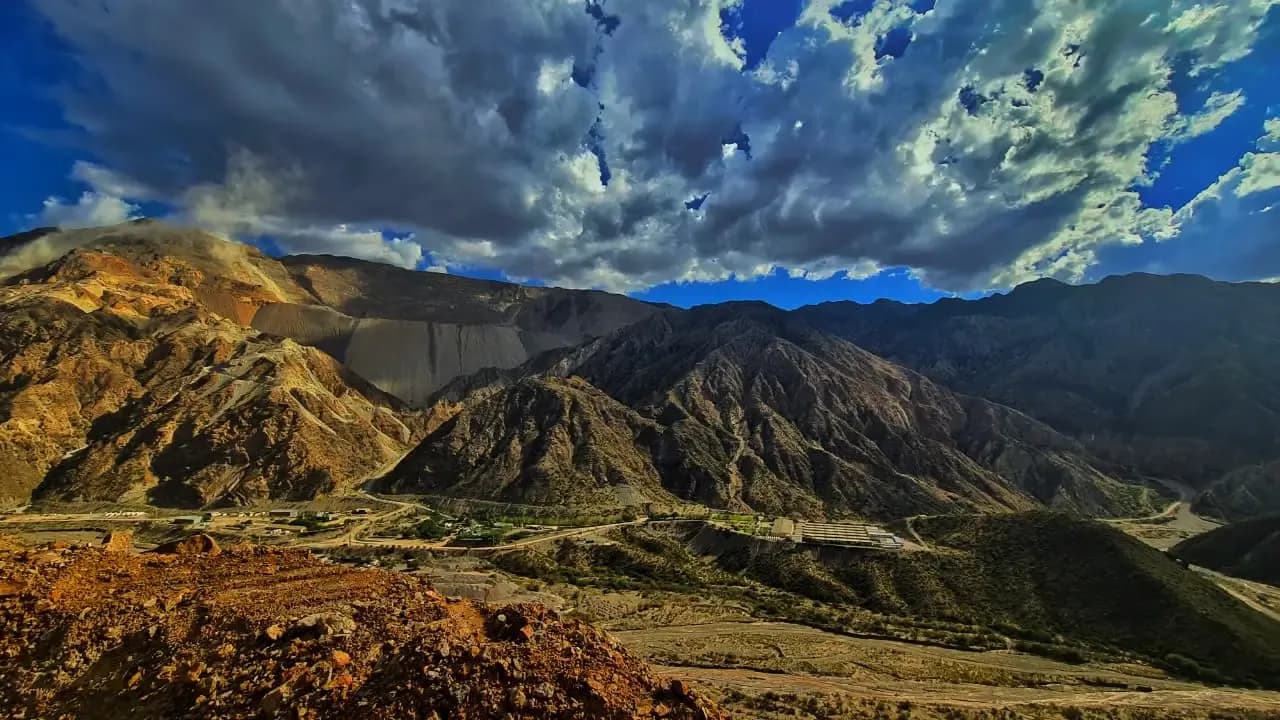
Minas Argentinas projects 30 years of development and employment for the mine located in the Jáchal department, in the north of San Juan province.
By Panorama Minero
Minas Argentinas S.A., a company that is part of Aisa Group, announced that the National Government’s Evaluation Committee issued a favorable opinion on the Deep Carbonates Project (DCP) submitted under the Large Investment Incentive Regime (RIGI), a preliminary step before the issuance of the corresponding resolution. This consolidates an ambitious project that will transform the Gualcamayo mine into a productive hub projected to operate for at least three decades. With this approval, the company takes a decisive step in its commitment to contribute to the revitalization of mining in San Juan and Argentina, promoting the development of an economic, technological, and labor hub for the national economy.
The RIGI approval represents a significant milestone for Argentine mining, providing regulatory predictability and legal certainty for large-scale investments. In this context, Minas Argentinas reaffirms its commitment to modern, responsible mining aligned with international standards, aimed at generating long-term economic and social value.
The approved plan includes an investment of over US$660 million, of which US$50 million will be allocated to geological exploration. The core of the project is the development and exploitation of the Deep Carbonates Project (DCP), a deposit that currently contains more than 3.5 million ounces of gold in resources, certified under NI 43-101 and JORC standards, of which 2.45 million ounces are already categorized as reserves.
The Gualcamayo mining district contains over 5 million ounces of gold in resources, including 3.2 million ounces classified as proven and probable reserves, according to the latest internationally certified report from April 2025. The company is currently completing an update report on its resources and reserves, with an expected increase of 20% compared to the previous report.
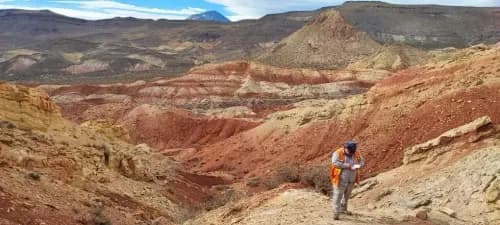
In parallel, Minas Argentinas is promoting a short- and long-term district exploration program. Currently, only about 4% of the property has been explored in depth, highlighting that a substantial portion of Gualcamayo’s geological potential is still to be discovered. The objective is to advance a comprehensive understanding of the district, expand the resource base, and lay the foundations for several decades of mining development, with a responsible and long-term technical vision.
Prefeasibility studies are already advanced. In the immediate term, work will begin on the engineering and technical feasibility of the project. In terms of labor impact, it is estimated that the construction phase, expected by the end of 2027, will generate between 1,000 and 1,500 jobs. Once production begins, expected by the end of 2029, approximately 600 permanent direct jobs will be consolidated.
The project includes the development of a state-of-the-art underground mine, a new processing plant, and, crucially, the incorporation of a modern pressure oxidation (POX) plant that will allow complex minerals to be processed, releasing the gold contained in the ore and enabling efficient recovery. This POX plant will be one of the first in South America and one of the few facilities of its kind operating worldwide, positioning San Juan and Argentina at the forefront of technological and industrial development in mining.
Additionally, the plan includes the construction of a 50 MW photovoltaic park to supply the operation’s electricity demand and significantly reduce its carbon footprint, in line with the company’s environmental commitments.
The RIGI approval marks a turning point in Gualcamayo’s recent history, which, just two years ago, was in the process of closure. Since Aisa Group’s arrival in 2023, the company has continued operations, regularized debts with suppliers, advanced in the reclassification of resources and reserves, and reactivated exploration work, now supporting a long-term development plan.
Juan José Retamero, head of Aisa Group, stated: “The inclusion of the Deep Carbonates Project in the RIGI highlights the true scale of this investment. The core of the project is the construction of a pressure oxidation plant, a highly complex technology that will process refractory minerals, one of the few such installations in the world and the first of its kind in South America. This development places Argentina and San Juan at the industrial and technological forefront of global mining.”
He added: “The construction and operation of a plant of this nature not only involves infrastructure investment but also knowledge. The project includes a strong component of training and development for Argentine professionals and technicians, who will operate, maintain, and optimize highly sophisticated industrial processes. This specialized human capital is a strategic asset for the country and one of the most significant impacts of the RIGI.”
“With the RIGI approval, we formally begin a new stage of the project, advancing in prefeasibility and feasibility studies and the engineering required for execution. This process will generate increasingly skilled employment, first during the development and construction phase, and then in long-term operations. We are talking about a project planned for several decades, with clear rules, a solid technical foundation, and an industrial vision for the future,” concluded Retamero.
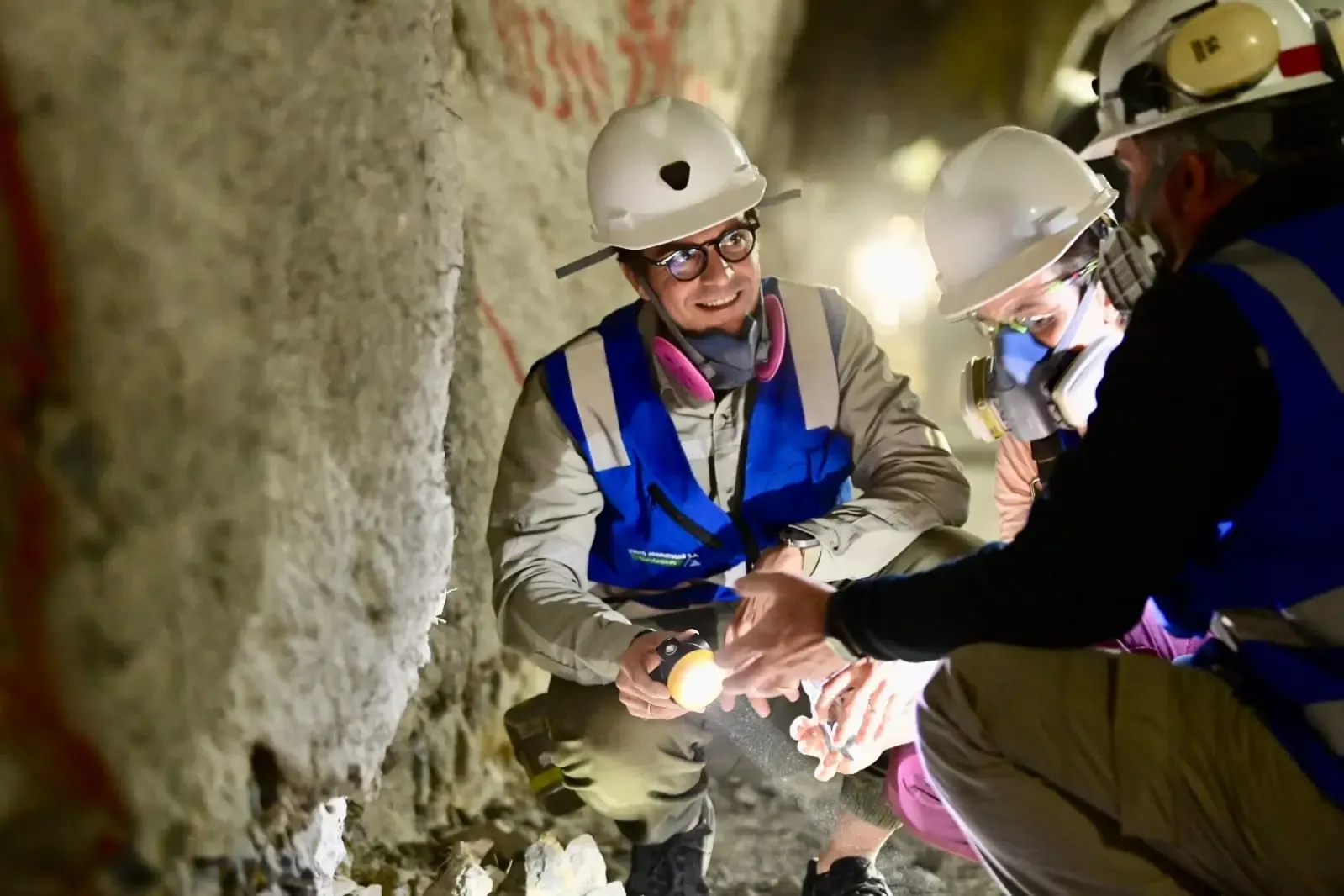
Throughout its history, the Gualcamayo mine has contributed over US$33 million to the Jáchal Fiduciary Fund, in addition to US$66 million in royalties, and has promoted hundreds of social, sports, and productive projects in the region. With the new plan, Minas Argentinas aims to expand this impact, prioritizing local suppliers and collaboration with communities and governments, focusing on developing technical skills and opportunities for future generations.
“The RIGI approval validates the seriousness and solvency of the Gualcamayo technical team, highly skilled and committed to the project. Deep Carbonates will not only transform our mine; we will create an ecosystem of socially, productively, and environmentally responsible development,” added Gabriel Corvo, General Manager of Minas Argentinas, concluding: “Gualcamayo will soon become a major engine of the Argentine economy. We have the mineral resources and technical teams to develop a project of this magnitude, and we will do so with the same commitment as always, working with local suppliers and prioritizing labor from our communities.”
Finally, the company highlighted and thanked the National Government and the Government of the Province of San Juan for advancing regulatory frameworks such as the RIGI, which allow for long-term project planning, creation of genuine employment, knowledge development, and transformation of natural resources into sustainable wealth for Argentina.