Travel to mining projects in Catamarca's Puna region will be supported by a new preventive monitoring system following the signing of a cooperation agreement between the Government of Catamarca and POSCO Argentina. The initiative introduces QR code registration checkpoints to strengthen road safety for workers, contractors, and suppliers who travel daily along the access corridors to mining operations.
By Panorama Minero
The agreement was signed in the presence of Governor Raúl Jalil and establishes a joint working agenda between the Ministry of Government, Security and Justice, the Provincial Secretariat of Security, and POSCO Argentina to strengthen prevention and road safety measures associated with mining activities.
As part of the agreement, QR code registration points will be installed at strategic checkpoints used by vehicles assigned to mining operations.
The system is part of POSCO Argentina's Vehicle Responsibility Program and is intended to enhance the monitoring of long-distance journeys to the Puna.
Through the system, drivers will be able to record information regarding vehicle condition, road conditions, and other aspects related to travel safety. The data collected will facilitate preventive monitoring of vehicle movements and enable a faster and more efficient response to potential incidents.
The agreement was signed by Alberto Natella, Minister of Government, Security and Justice; Gastón Venturini, Secretary of Security; and representatives of POSCO Argentina, led by Song Siyoung, Director of the company's Safety and Hygiene Department. Members of the company's Safety and Hygiene teams and representatives from its Catamarca office also attended the ceremony.
Logistics: A Key Component of Mining Operations in the Puna
The initiative comes amid growing logistical activity associated with mining projects in Catamarca's Puna, where workers, contractors, suppliers, and supply vehicles travel long distances every day to reach mining operations.
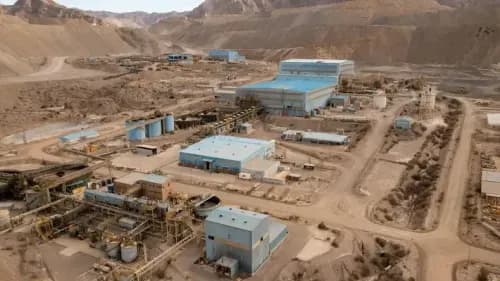
POSCO Argentina operates the Sal de Oro Project, located in the Hombre Muerto Salar, a lithium development that extends across the provinces of Catamarca and Salta and ranks among the leading mining projects advancing in Argentina's Puna region.
Public-Private Cooperation to Strengthen Prevention
Officials from the Provincial Secretariat of Security emphasized that cooperation between the public and private sectors represents "a tool to strengthen prevention policies, reduce risks along roadways, and consolidate a road safety culture focused on protecting people."
The implementation of the monitoring system is intended to provide a new management tool for the transportation corridors used by the mining industry, supporting the continued growth of mining operations in the Puna through preventive monitoring mechanisms that contribute to improving the safety of everyone traveling to mining projects.