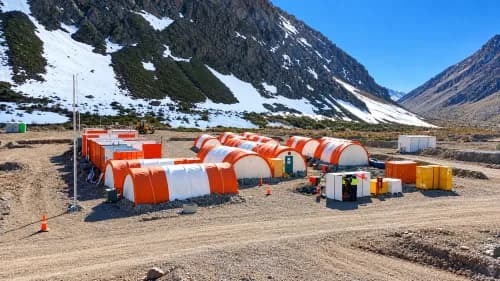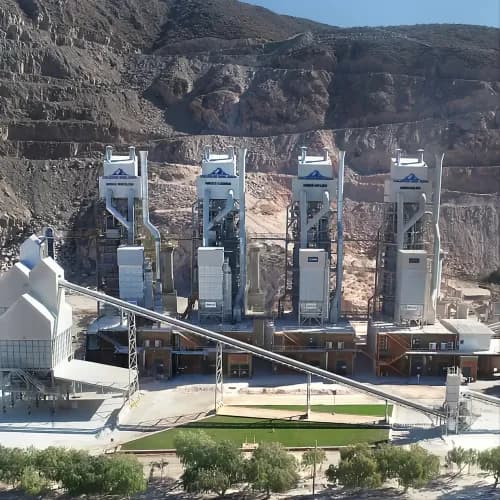
The communities of Fiambalá and the Tinogasta department will be invited to participate in a series of public hearings aimed at defining how mining-related revenues will be allocated, as the Government of Catamarca prepares consultations to establish guidelines for the use of funds generated by extractive industries. Infrastructure, tourism and roadworks projects are currently among the priorities under consideration. The resources stem from the production of the Tres Quebradas (3Q) project, operated by Zijin Liex.
By Panorama Minero
In terms of infrastructure, the Municipality of Fiambalá has long identified several priority initiatives, including the construction of a multi-purpose sports complex, the revitalization of the Fiambalá Hot Springs tourist complex, and road works linking Río Las Losas with Río Guanchín. These projects are regarded as strategic for the social and tourism development of the area. Local authorities stated that such investments are “essential for the future of the community and allow Fiambalá to strengthen its regional projection.” The public hearings will be jointly organized by the municipality and the Provincial Ministry of Government, with open participation from local residents.
The Fiambalá Hot Springs represent one of Catamarca’s main tourist attractions. Their enhancement is expected to improve infrastructure and services, increasing visitor numbers. The site was recently expropriated by the provincial government and transferred to the municipality for administration.
Governor Raúl Jalil recently confirmed that consultation rounds on public works will begin in February, enabling residents to propose projects to be financed with resources from the Mining Trust Fund. Provincial authorities highlighted that this mechanism “represents the highest level of transparency achieved to date regarding the use of mining revenues.”
Mining companies operating in Catamarca contribute royalties and corporate social responsibility funds to the Mining Trust Fund, which is managed through a dedicated administrator, with Banco Nación acting as trustee. The system operates through public hearings, allowing communities to express their needs and priorities regarding public works.
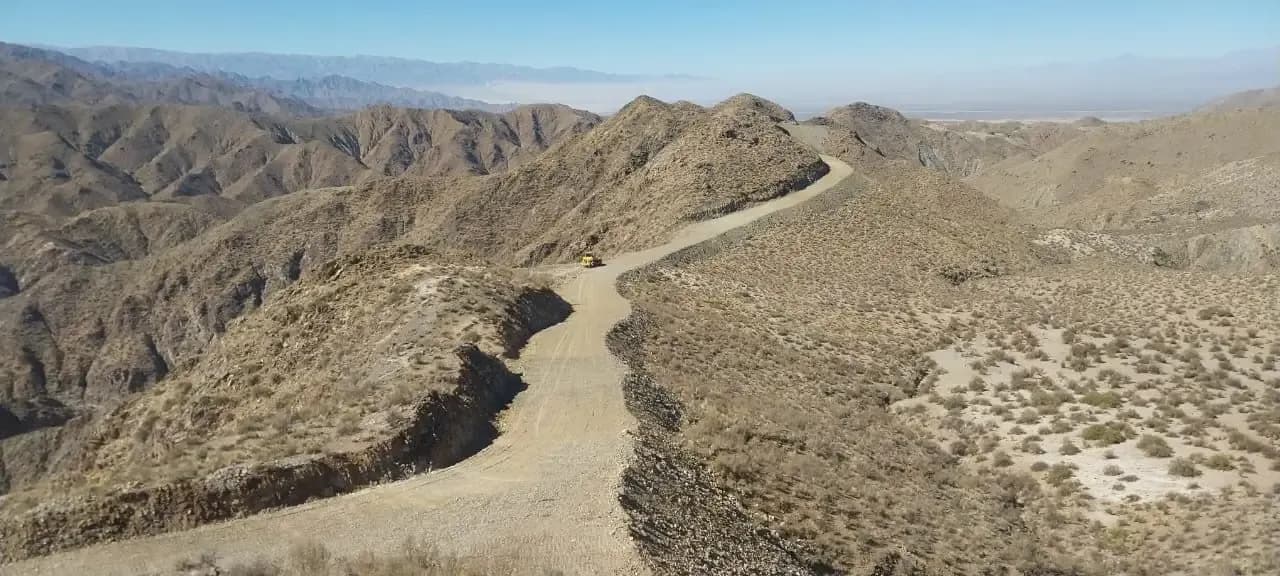
According to Governor Jalil, this framework has enabled the execution of projects that have had a tangible impact across the province, including paved roads to Antofagasta de la Sierra and the opening of access routes in Fiambalá. This week, provincial authorities reported progress on the final kilometers of the road linking Chuquisaca, in Fiambalá, with Antofagasta de la Sierra—two districts considered strategic for the lithium industry. Sixteen kilometers of the mountain section have already been completed, with five kilometers remaining, one of the most technically challenging segments of the project. Once completed, the new route will reduce the distance between Fiambalá and Antofagasta by approximately 50 kilometers and is expected to function as a new tourism and productive corridor for the region.
Fiambalá has already benefited from several projects financed through mining royalties, including the Medanitos Bridge, urban paving works, and partial funding for the new bus terminal.
Additionally, the construction of a new 132 kV high-voltage transmission line connecting Tinogasta with Fiambalá stands out as a key infrastructure project addressing a long-standing local demand. With an additional investment of US$ 20 million by Zijin Liex, the 50-kilometer power line is expected to be completed in the coming months. The project will not only improve residential electricity supply but also support the development of tourism, mining and agribusiness. Works are currently underway at the Tinogasta transformer station, alongside the installation of two 60 MVA transformers in Fiambalá.