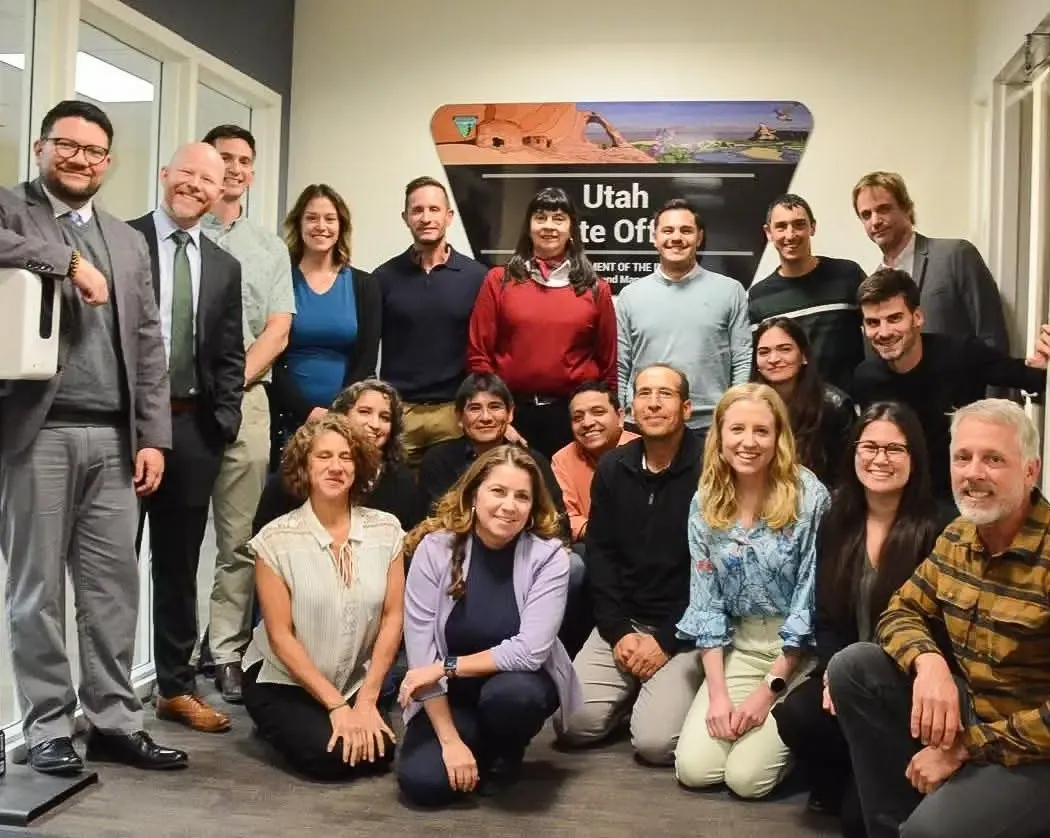
The Ministry of Mining of Catamarca took part in the “Workshop on Developing Regulatory Oversight Guidelines for Lithium Mining and Direct Lithium Extraction (DLE) Operations Using Environmental Impact Report Data and Technical Exchange,” held in Salt Lake City, Utah, in the United States. “It is essential to continue adding tools that allow us to consolidate responsible mining,” highlighted Governor Raúl Jalil.
By Panorama Minero
Catamarca, represented by the Minister of Mining, Olga Teresita Regalado, and the Director of the Ministry’s Legal Service, Raúl Colombo, participated in the event as part of an Argentine delegation composed of professionals from the National Mining Secretariat, the Argentine Geological and Mining Service (SEGEMAR), and the provinces of Jujuy and Salta. “We presented Catamarca’s experience in environmental assessment, mining regulation, and responsible management of natural resources. We also took part in technical and environmental exchange spaces alongside specialists, international organizations, and representatives from other provinces and countries linked to mining activity,” Governor Raúl Jalil stated in a post-event assessment.
The workshop brought together technical and legal experts with the objective of strengthening regional capacities to evaluate critical mineral development strategies, with special emphasis on improving decision-making related to foreign investment, regulatory oversight, and sustainable resource management. “Within this framework, Catamarca contributed regarding the regulatory framework governing mining activity in the province, the scale and rigor of environmental impact assessment processes, and the role of the State in maximizing the socioeconomic benefits derived from mining activity,” representatives from the Ministry expressed.
Catamarca’s recent experience includes the Cumulative Environmental Management and Impact Study conducted on the Los Patos River basin in Antofagasta de la Sierra, a project carried out jointly by local professionals and various state agencies, with special funding from the Federal Investment Council. The results were key to the reactivation of new lithium projects in a strategic area for Argentina and the region.
This training forms part of a broader interinstitutional initiative led by the Bureau of Economic, Energy, and Business Affairs (State/EEB) of the United States Department of State through its Energy and Mineral Governance Program (EMGP). Implementation is carried out by the Commercial Law Development Program (CLDP) of the U.S. Department of Commerce and the Office of International Affairs (DOI-INT) of the U.S. Department of the Interior, in close collaboration with governmental counterparts from Argentina and Bolivia.
In addition, the Argentine delegation participated in the “15th Biennial Forum on Great Salt Lake Issues,” a valuable space for exchanging experiences among peers and strengthening dialogue on challenges related to environmental management and community participation. Topics addressed included the interaction among multiple operators dedicated to the extraction of critical minerals from the same natural system, as well as the need to reconcile such activity with social, environmental, and ecological considerations, promoting sustainable resource development.
There were also field activities and technical sessions with the United States Geological Survey (USGS), focused on groundwater modeling, integrated water availability assessments, and monitoring in the Great Salt Lake basin. The program also included a technical field visit to the direct lithium extraction (DLE) pilot plant operated by Waterleaf Resources, a subsidiary of Lilac Solutions, located in the North Arm of the Great Salt Lake.
“For our province, it is essential to continue strengthening institutional capacities and adding tools that allow us to consolidate responsible mining, with environmental oversight and tangible benefits for our people,” Jalil emphasized.