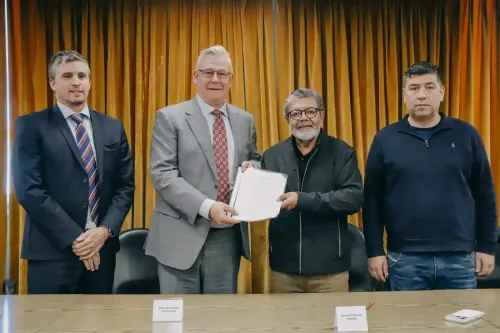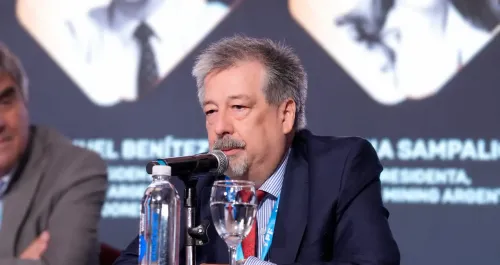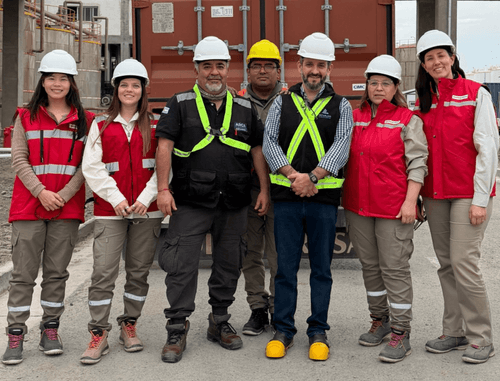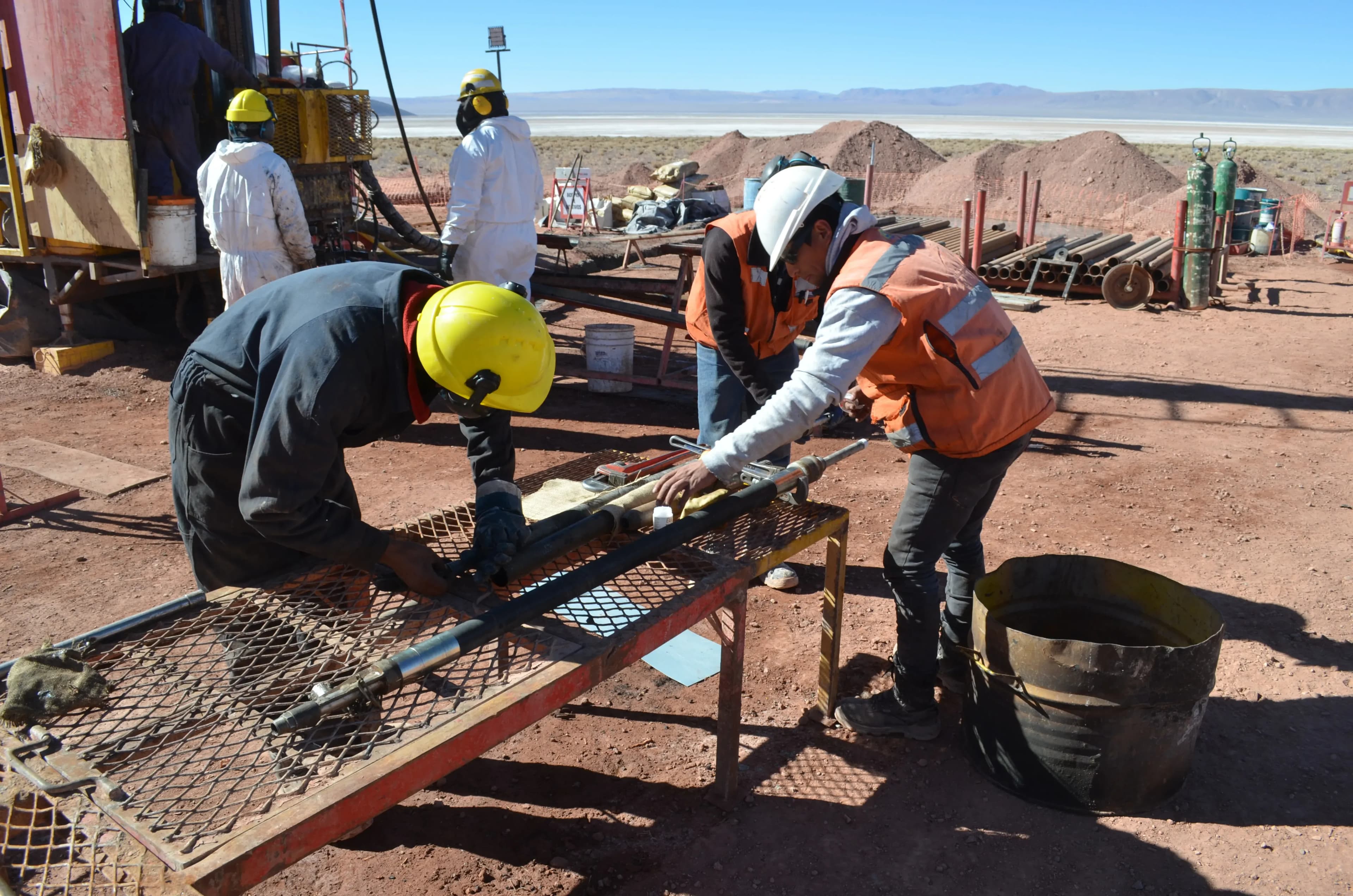
Lithium development in Argentina continues to attract globally relevant technology partners. Argentina Lithium & Energy Corp. announced the signing of a Memorandum of Understanding (MOU) with Xi’an Lanshen New Material Technology, one of the world’s leading companies in Direct Lithium Extraction (DLE) technologies, with the aim of accelerating the technical and engineering advancement of its flagship Rincón West Project in Salta Province.
By Panorama Minero
The agreement establishes a framework for strategic collaboration under which Lanshen will contribute its proprietary DLE platform, pilot plant technology, advanced engineering solutions and project development expertise, with the objective of completing a feasibility-level evaluation at industrial scale. The initial focus will be on a battery-grade lithium carbonate plant with an annual capacity of 5,000 tonnes, with potential future scalability to a range of 15,000 to 20,000 tonnes per year.
As disclosed, Lanshen will provide engineering packages, process design, equipment quotations, specialized technical personnel and integrated pilot systems, all of which are critical inputs for a full feasibility assessment. These contributions, including technical services, engineering studies and pilot plant design, may translate into a progressive equity participation in Argentina Litio y Energía S.A. (ALESA), Argentina Lithium’s wholly owned subsidiary, through an earn-in structure linked to technical milestones.
The MOU is non-binding, except for confidentiality and certain legal provisions, and will remain in force for a period of 12 months. During this time, the parties will advance due diligence and negotiate a Definitive Collaboration Agreement, which will address key aspects such as DLE technology exclusivity, governance, long-term financing structures and intellectual property licensing.
A relevant step following the resource estimate
The partnership follows shortly after Argentina Lithium announced a new NI 43-101 compliant mineral resource estimate for Rincón West, a milestone that strengthens the project’s technical foundation. The deposit is strategically located in the Salar del Rincón, adjacent to Rio Tinto’s operation, within one of the most competitive and technically attractive brine jurisdictions of the Lithium Triangle.
In this context, Argentina Lithium will continue to lead the project’s environmental, social and regulatory work, including permitting, community engagement, hydrogeological studies, metallurgical programs and site logistics, as well as the integration of the DLE flowsheet into the overall engineering strategy.
The company highlighted that the combination of technical and operational capabilities from both parties is expected to reduce development timelines, optimize process efficiency and materially improve the pathway toward a future investment decision.
Technology, strategic partners and a long-term vision
Nikolaos Cacos, CEO of Argentina Lithium, stated that the agreement with Lanshen “marks a turning point” for the company, as it aligns with a global leader capable of delivering pilot solutions, engineering expertise and commercial-scale deployment. According to Cacos, the collaboration will help reduce technical risk and maximize the long-term value of the company’s brine assets within the Lithium Triangle.
Zhijun Feng, President of Lanshen, emphasized that the company’s DLE technology has been developed over more than a decade, with a focus on high lithium recovery rates, low impurity levels and environmental efficiency, attributes that he considers critical for advancing Rincón West toward feasibility and eventual commercial production.
The project is also supported by Stellantis N.V., which holds a 19.9% equity interest in ALESA and long-term offtake rights of up to 15,000 tonnes per year of lithium carbonate equivalent (LCE). The addition of Lanshen as a specialized technical partner further strengthens Rincón West’s positioning as a next-generation lithium development, aligned with the global shift toward more efficient extraction technologies with a lower environmental footprint.