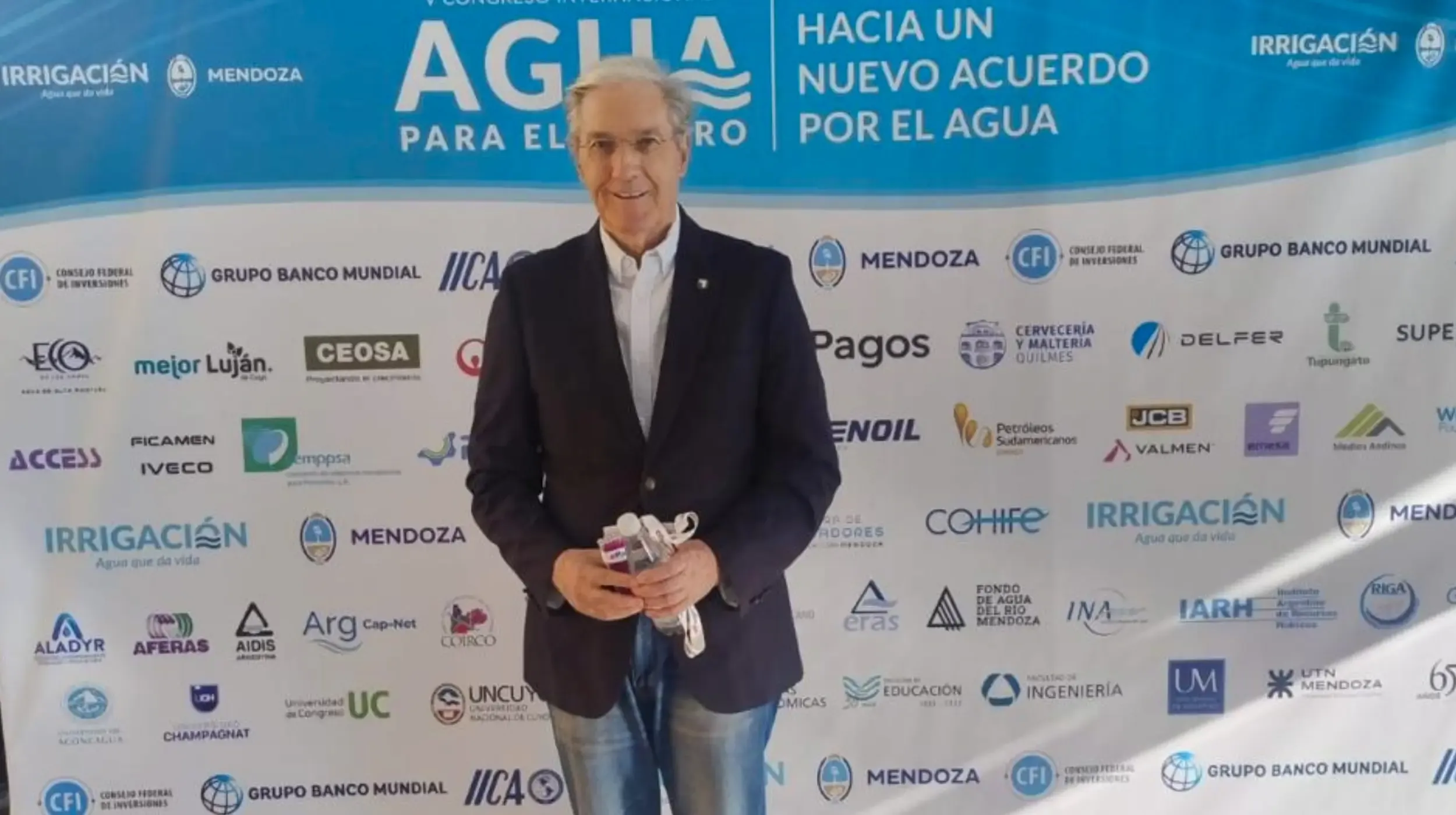
Engineer Luis Jiménez proposes transforming San Juan’s mining model in the Copper Era, with projected investments of US$20 billion. He suggests creating sovereign funds and investment trusts to finance water and technological infrastructure, preventing mining revenues from being diluted through current expenditures. A central pillar is the concept of “Social Ownership,” enabling citizens to save through copper-backed bonds issued via Banco San Juan. Finally, he proposes a strategic alliance with Mendoza to create a regional financial corridor capable of issuing green bonds, ensuring sustainability and social license.
By Panorama Minero
Engineer Luis Jiménez, a leading researcher at the Catholic University of Cuyo, presented a strategic analysis outlining a roadmap for mining development in the province of San Juan. According to the specialist, the evolution of the sector highlights the need to plan for the future in the face of the massive investments projected for the copper industry. The province is currently in an ideal position to undertake a process of savings and financing linked to mining capital flows.
To understand the magnitude of what is at stake, Jiménez’s report reviews the impact of the last two decades (2004–2024), during which the startup of the Veladero mine in 2005 marked a turning point. Over this period, mining evolved from a marginal activity to representing between 75% and 85% of San Juan’s exports, reaching US$1.467 billion in foreign sales in 2024. The sector and its associated services already account for approximately 35–40% of the province’s Gross Geographic Product during years of high production.
However, Jiménez argues that while the last 20 years belonged to gold, the next 20 years will belong to copper. San Juan hosts five of the world’s most important copper projects: Josemaría and Filo Del Sol (Vicuña), El Pachón, Los Azules, and Altar. These projects could attract investments ranging between US$15 billion and US$20 billion over the next decade, potentially doubling provincial revenues by 2030. This transformation is not only economic but also geopolitical, given copper’s essential role in the global energy transition and electro mobility.
The core of the researcher’s proposal lies in the creation of sovereign or stabilization funds, similar to those implemented in Norway and Chile. The goal is to ensure that the financial impact of copper is not diluted in current expenditures, but rather that a portion of mining revenues is captured to create an investment fund whose returns would finance non**-mining productive infrastructure** such as precision agriculture and solar energy projects. To achieve this, he proposes evolving from current public works trusts toward “second-generation” trusts that function as investment and guarantee funds.
Within this framework, Banco San Juan would emerge as the ideal strategic partner. Jiménez suggests that the institution should lead the issuance of debt securities or bonds backed by the future cash flow of copper royalties. This would allow both provincial financial surpluses and citizens’ private savings to become “copperized” through participation certificates linked to the value of the metal. In addition, the bank could facilitate mining factoring mechanisms to inject immediate liquidity into local SMEs providing services to large mining operations.
One of the most innovative aspects of the document is the concept of “Social Ownership of the Asset” aimed at strengthening social license. By enabling a teacher or doctor from San Juan to save through bonds backed by projects such as Vicuña, the population would become an indirect partner in mining development, generating resilience against anti-mining narratives and abrupt regulatory changes. Jiménez also proposes a strategic alliance with Mendoza to create a “Cuyo Financial Corridor” capable of providing greater solvency and scale to these financial instruments.
Finally, the researcher emphasized the importance of the Knowledge Economy and water management. He proposes that the trust fund finance a Mining Technology Hub to export engineering solutions, as well as the creation of Water Bonds to modernize agricultural irrigation systems. According to Jiménez, this would require legislation guaranteeing mixed governance—with participation from universities and banks—so that the fund becomes a long-term state policy capable of transcending electoral cycles.