The program aims to deepen coordination with municipalities, communities, and stakeholders in the mining value chain across a region where demand for greater participation by local suppliers continues to grow.
By Panorama Minero
The Secretariat of Mining of the Province of Salta has launched a mobile office that will travel through different localities in the Salta Puna, with the objective of strengthening the State’s territorial presence in areas where mining activity is taking place and deepening engagement with communities, municipalities, and stakeholders linked to the mining value chain.
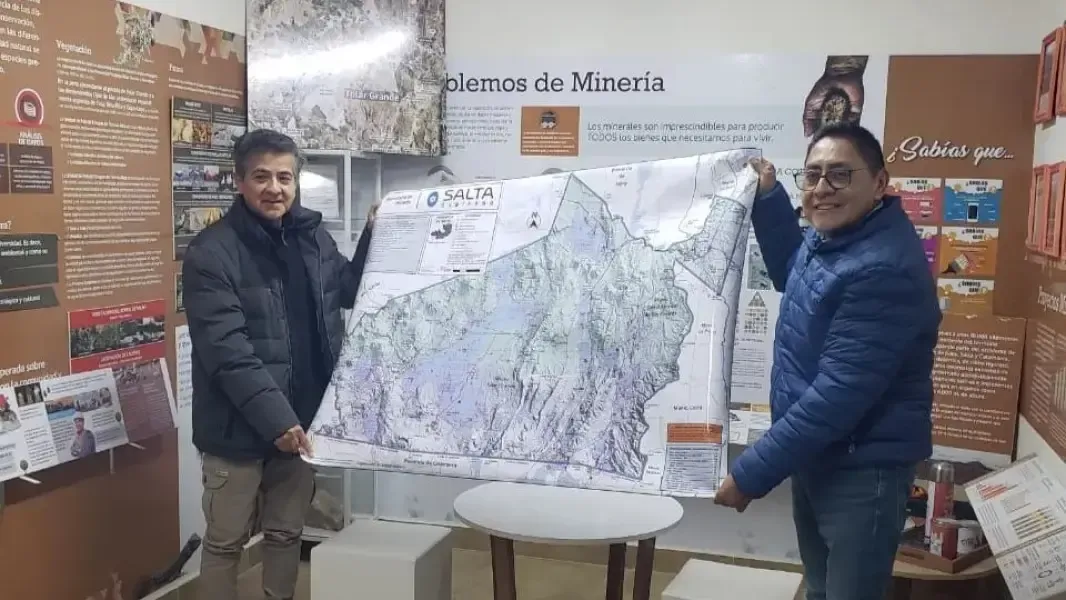
The initiative began in Tolar Grande, where the service office operates within the Urban Integration Center (CIU), a building that also houses the Mining Interpretation Center. The opening of the office was supported by the local municipality and Mayor Sergio Villanueva.
The Secretariat stated that the sustained growth of mining activity in the region requires a stronger institutional presence, not only in monitoring and oversight tasks but also in generating permanent channels of dialogue with Puna communities and economic actors connected to the sector.
Salta’s Secretary of Mining, Gustavo Carrizo, stated that the initiative seeks to consolidate a direct relationship with the communities where mining projects are advancing.
“We understand that the State must be present in the territory. Mining creates opportunities and challenges, and it is essential to maintain a close relationship and coordinated work with all stakeholders,” he said.
Greater Integration of Local Suppliers
The Chamber of Mining Suppliers of Salta (CAPEMISA) has consistently highlighted the need to strengthen policies that enable greater integration of local suppliers, particularly small and medium-sized enterprises located in the province’s interior.
Among the main challenges identified by the sector are the financial and administrative requirements associated with mining contracts, the safety and quality standards demanded by operating companies, and the logistical difficulties faced by businesses located in remote areas. Similar concerns have also been raised by Gabriela Miranda, President of the Chamber of Mining and Tourism Service Providers of the Argentine Puna (CAPROSEMITP).
In this regard, suppliers from the Puna region have emphasized the need for greater technical support and financing tools to compete in tenders and expand their operational capacity. In communities located near mining projects, small companies and entrepreneurs involved in transportation, gastronomy, accommodation, road services, and maintenance argue that one of the main obstacles is achieving the scale and level of formalization required by the industry.
The Province operates a Provincial Registry of Local Mining Suppliers, created as a tool to promote the participation of Salta-based companies within the mining supply chain. At the same time, various provincial agencies and business chambers organize business roundtables and training programs aimed at strengthening the technical and administrative capabilities of local suppliers.
According to the Secretariat of Mining, the mobile office will facilitate working meetings with community leaders, municipalities, and local institutions, providing administrative tools and consultation channels related to mining activity and regional economic development.
The agency also announced that the mobile office will continue traveling to different localities throughout the Puna region and that the date, location, and service schedule for each visit will be communicated in advance to the community.