On Mining Day, Argentina’s Secretary of Mining, Luis Lucero, stated at the International San Juan Mining Expo that the country is experiencing “a historic opportunity” to transform its geological potential into real development. He defended the RIGI, celebrated the reform of the Glacier Law, and criticized “internal customs barriers,” excessive bureaucracy, and provincial restrictions that hinder investment.
By Panorama Minero
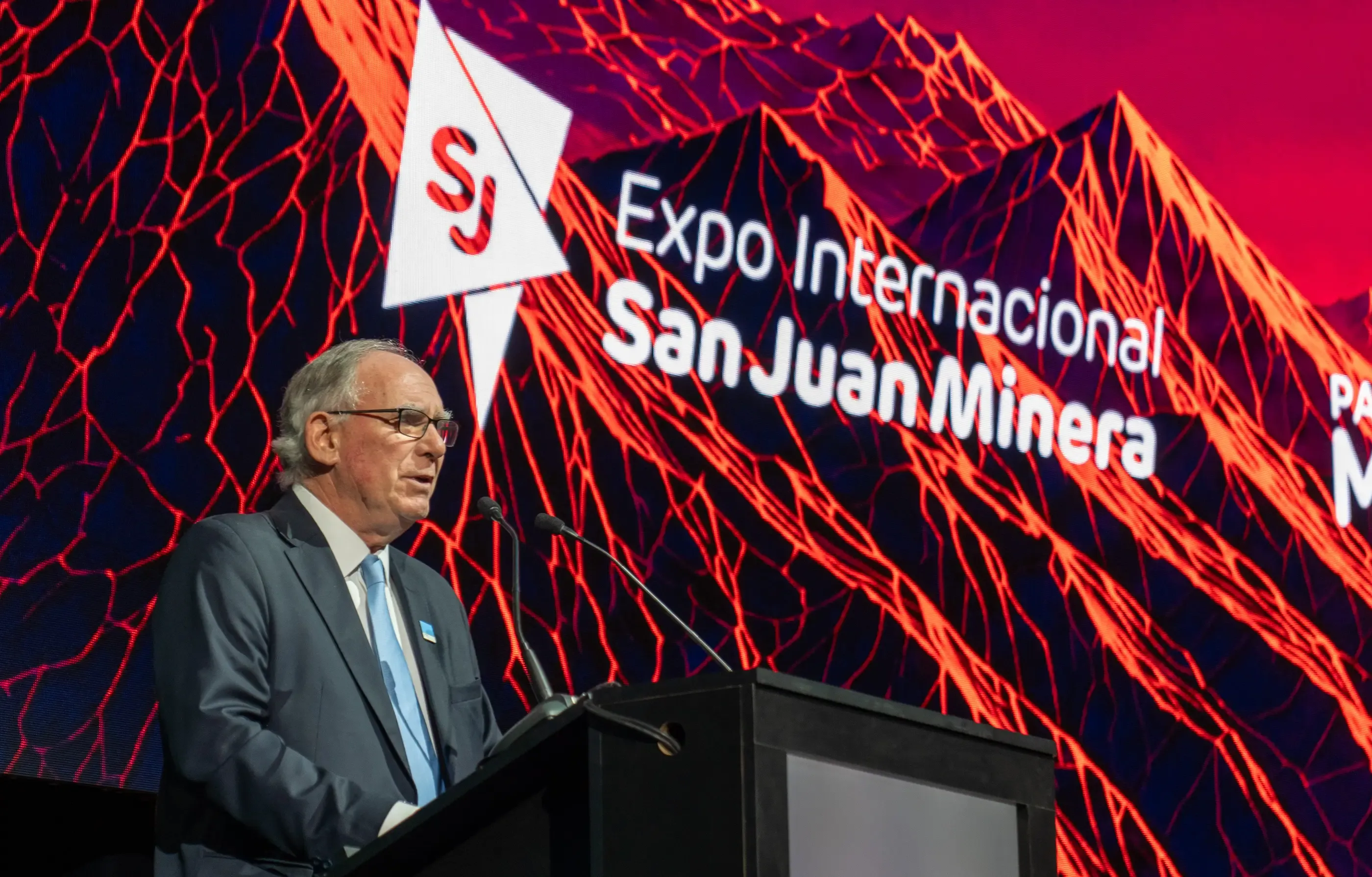
Within the framework of Mining Day and before a packed audience at the International San Juan Mining Expo organized by Panorama Minero, Argentina’s Secretary of Mining, Luis Lucero, presented a political and economic assessment of the national mining administration and delivered a strong message both domestically and internationally: Argentina has an unprecedented opportunity to become a global player in critical minerals, but it still carries internal obstacles that threaten to slow down that process.
“We cannot afford to impose obstacles on ourselves,” Lucero warned during his presentation in San Juan, a province he defined as “a protagonist of Argentine mining” due to its concentration of copper reserves capable of reshaping the country’s export profile over the next decade.
The official maintained that the current scenario is “unprecedented” for the sector and directly linked that transformation to the reforms promoted by Javier Milei’s administration. “Mining has taken a central place in the national development agenda. Without that political decision, none of what we are experiencing today would be happening,” he stated.
The Mining Day celebration found the sector at one of its highest points of political and economic visibility in recent years. May 7 commemorates the enactment of the first Mining Promotion Law in 1813 and arrives amid strong investment expectations.
During 2025, mining exports reached US$6.074 billion, the highest historical record for the activity. So far in 2026, foreign sales have already accumulated US$2.409 billion, while the country’s 695 exploration-stage mining projects generate 0.6% of Argentina’s registered private employment.
In addition, the sector concentrates the majority of initiatives submitted under the Large Investment Incentive Regime (RIGI). Currently, there are mining projects worth US$42 billion under the RIGI, and more than US$9 billion already have formal approval.
Lucero highlighted that, within mining alone, “there are seven approved projects, thirteen under review, and approximately US$50 billion committed.” “Mining projects represent 54% of all investments submitted under the RIGI,” he specified.
The Defense of the RIGI and the Glacier Law Reform
One of the central themes of the speech was the defense of the RIGI and the modification of the Glacier Law, two tools the government considers essential for accelerating investment.
“Adapting the Glacier Law seemed impossible, and here we are, with a new regulation already in force. It was simply a matter of believing in ourselves, working, and reaching consensus,” stated Argentina’s Secretary of Mining.
According to Lucero, for more than 15 years mining coexisted with “legal uncertainty and gray areas” that complicated the planning of large-scale projects. “Today we have a clearer, more predictable, and more balanced framework that allows environmental protection to coexist with productive development,” he emphasized.
The official insisted that Argentina has regained competitiveness thanks to macroeconomic stabilization and the new regulatory framework. “Today the country is part of a select group of nations with fiscal surplus and the ability to export energy, when just three years ago it imported energy and had a deficit,” he affirmed.
The Warning Regarding La Rioja and Internal Obstacles
Despite the optimistic tone, Lucero dedicated a significant part of his speech to listing the problems that still condition the development of the sector.
The most sensitive case was the conflict generated in La Rioja by judicial and political restrictions affecting the logistics of the Vicuña project, one of the most important copper projects in the world. “Decisions such as the one recently taken by the government of La Rioja to paralyze the Vicuña project are exactly the kind of actions that obstruct the path and harm everyone,” he criticized.
The national official also pointed to “internal customs barriers,” logistical obstacles, and excessive bureaucracy that continue to fragment the Argentine market. “We cannot continue living with bureaucratic obstacles that reduce our competitiveness compared to other countries,” he stated.
Another issue he placed on the table was the persistence of provincial legislation that restricts or prohibits mining activity. “It is a challenge for those laws to be reviewed and adapted to modern times,” he affirmed.
He went further by linking the environmental debate to the global energy transition. “Believing that mining is the enemy of the environment is completely mistaken. I would even say that obstructing the path toward electrification—which demands copper, lithium, silver, and other critical minerals—is environmentally irresponsible,” he argued.
The Federal Mining Roundtable
Parallel to the presentation, the national government formally launched the Federal Mining Roundtable, a coordination platform between the national government, provinces, companies, unions, and business chambers to coordinate policies related to mining development.
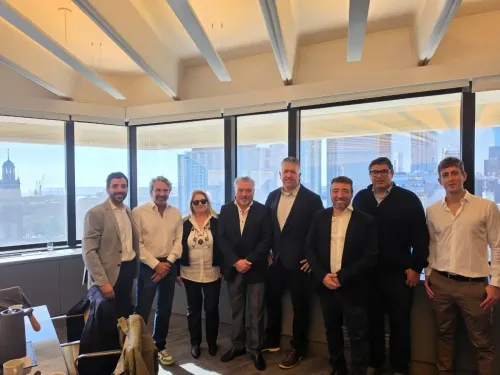
The meeting included Presidential Secretary General Karina Milei; Secretary of International Economic Relations Fernando Brun; the head of the Federal Investment Council (CFI), Ignacio Lamothe; as well as national legislators, union representatives, and mining executives.
Among the governors present were Marcelo Orrego (San Juan), Raúl Jalil (Catamarca), Martín Llaryora (Córdoba), Carlos Sadir (Jujuy), Alfredo Cornejo (Mendoza), and Maximiliano Pullaro (Santa Fe). Business representatives included Roberto Cacciola (CAEM), Martín Pérez de Solay (Glencore), Michael Meding (Los Azules), José Luis Morea (Vicuña), and representatives from Fortescue, Mansfield, Minera Del Altiplano, and other sector companies. Union representatives from AOMA and UOCRA also attended.
During the Federal Mining Roundtable meeting, Karina Milei stated that “Argentina has always had enormous mining potential, but it never knew how to take advantage of it.” She compared the local situation with Chile: “In 2023, Chile exported more than US$50 billion in mining, while Argentina barely exported US$4 billion,” emphasized the Presidential Secretary General.
Luis Lucero: “This Is Just Beginning”
Lucero insisted that the country is still in the early stages of transformation and that the real challenge will be sustaining the rules of the game over time. “None of this is an arrival point—it is a starting point,” he affirmed.
The official assured that three factors that are rarely found simultaneously are converging today: global demand for critical minerals, a more orderly macroeconomy, and a competitive regulatory framework.
However, he warned that success will depend on the country’s ability to solve bottlenecks in infrastructure, logistics, and specialized labor. “It is not enough to have resources. We must be intelligent and think strategically,” he stated.
At the close of his speech, he delivered a statement summarizing the government’s political message to the sector: “If we manage to sustain clear rules and a common strategy, I have no doubt that mining will become one of the pillars of Argentine development for many decades.”