The Manuel Savio School in Calingasta continues to strengthen its role as the district's leading institution for training mining technicians, amid sustained enrollment growth driven by the expansion of mining activity. According to Principal Alfredo Acosta and Vice Principal José Luis Borques, the school has nearly doubled its student population and is expanding its facilities with new classrooms and workshops financed through contributions from the mining sector.
The institution is also reinforcing practical training through partnerships with companies including Glencore, Los Azules, and Casposo, as well as the National University of San Juan (UNSJ), where students complete professional internships and technical testing. School authorities also highlighted the growing participation of women in the mining specialization and the institution's contribution to creating employment opportunities that allow young people to build their careers in Calingasta.
By Panorama Minero
The Manuel Savio School is the only secondary education institution in the Calingasta district. Its academic program focuses on training mining technicians, a role considered essential for providing the skilled workforce required by the region's mining industry. This specialization seeks to enable local residents to access employment opportunities within their own community, reducing the need to relocate elsewhere for work. Principal Alfredo Acosta and Vice Principal José Luis Borques outlined the current status of the institution and the significant growth in student enrollment recorded over recent years.
The increase in enrollment is closely linked to the expectations generated by the expansion of large-scale mining in the Department of Calingasta, San Juan Province. According to school authorities, enrollment has increased from 160 students during the 2019-2020 periods to 320 students today. This growth is reflected in annual admissions, with 72 new students enrolled this year and approximately 80 new students projected for the next academic year. Attendance has also increased among students from more remote communities such as Villanueva, where enrollment has grown from five to more than twenty students.
To accommodate this growing demand, the Provincial Government, led by Governor Marcelo Orrego, has made significant investments to expand the school's infrastructure. The ongoing works include the construction of four new classrooms and four specialized workshops dedicated to metalworking, carpentry, residential electrical installations, and engines. The new facilities are expected to be inaugurated in August, helping to address space limitations resulting from the increase in enrollment. The expansion is being financed through funds provided by the mining sector. The classrooms will also be equipped with modern heating and cooling systems as well as upgraded lighting.
The educational process is undergoing a period of innovation and technological adaptation to align with the requirements of today's mining industry. The current educational approach prioritizes not only mining-specific technical knowledge but also the development of digital competencies, reading comprehension, writing, and communication skills. Teamwork is promoted as an essential capability, whether students choose to continue their education at university or enter the workforce upon graduation.
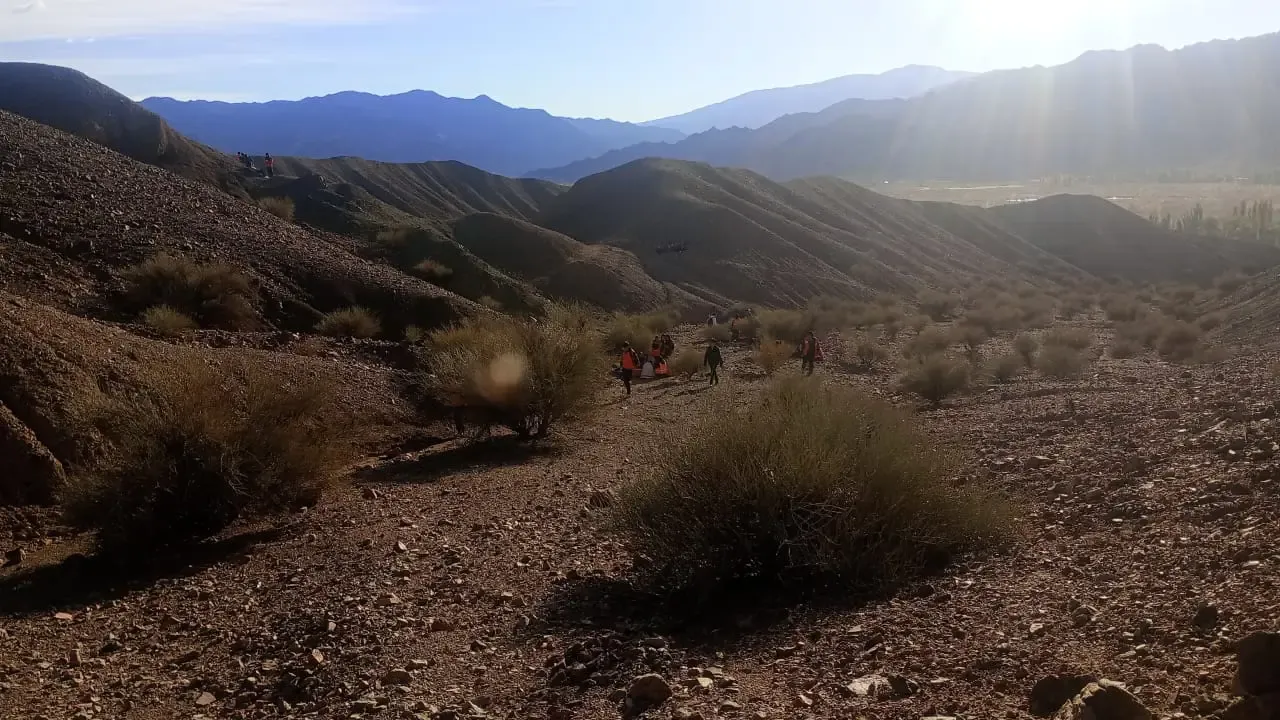
Students' practical training is supported through agreements between the school, the Ministry of Education, the Department of Labor, and several mining companies. Seventh-year students participate in professional internships that provide direct exposure to real working environments. These activities are currently carried out at the exploration camps of Glencore and Los Azules. Beginning this year, students have also started internships at the Casposo Project, where they gain experience in laboratory and refinery operations. This new opportunity allows students to broaden their skills beyond the geological identification of minerals and the physical and chemical properties previously studied.
In addition to the internships completed by senior students, the school organizes visits and educational activities for third- and fourth-year students to introduce them to mining-oriented studies. The institution also maintains a close relationship with the academic sector, with seventh-year students using the laboratories of the National University of San Juan (UNSJ) to carry out technical testing. Within the school itself, teachers have encouraged innovation by guiding students in the construction of workbenches for the new workshops using materials supplied by the Ministry of Education. Classroom facilities have also been upgraded through donations of televisions and computers, facilitating the use of audiovisual resources during lessons.
Another noteworthy aspect of the Manuel Savio School is the gender balance within its student body, with an even distribution between male and female students. Technological advances in the mining industry have facilitated greater female participation by reducing the need for physically demanding tasks in many operational areas. The institution has graduates who currently hold leadership positions in mining projects or are pursuing higher education in Geology and Mining Engineering. The technical education provided by the school represents an important driver of social development in Calingasta, enabling families to remain in their communities while accessing new employment opportunities created by the mining industry.