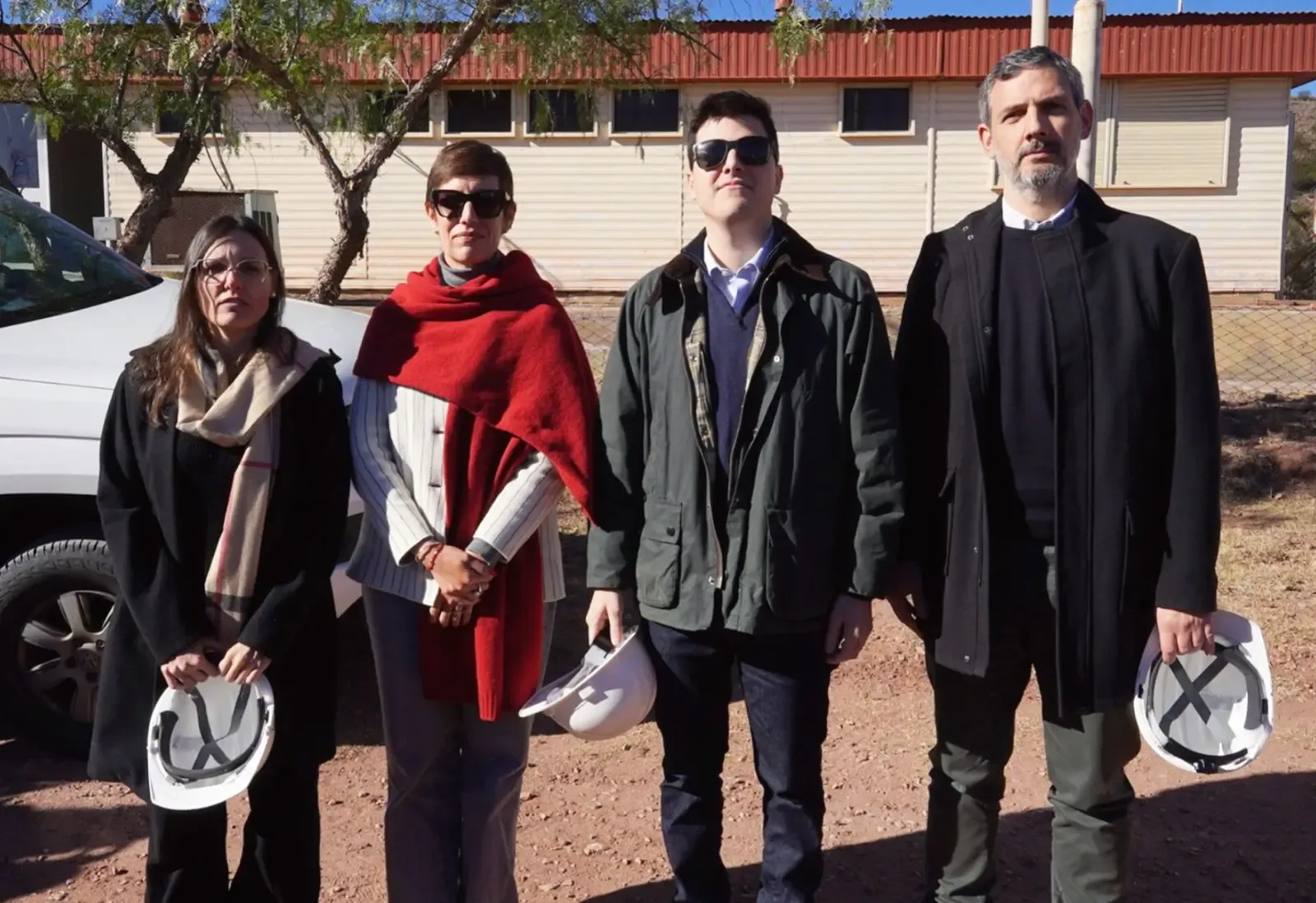
Uranium mining has returned to the national political agenda, and Sierra Pintada is once again at the center of that discussion. This became clear during the site visit led by authorities from the Secretariat of Nuclear Affairs together with the Government of Mendoza, which left a clear message: the national government no longer views the historic San Rafael deposit solely as an environmental remediation site, but also as a strategic asset within Argentina's nuclear value chain.
By Panorama Minero
The statement that defined the visit came from Secretary of Nuclear Affairs Federico Ramos Napoli:
“Since the creation of the Secretariat of Nuclear Affairs, we have identified building social license around uranium mining as a priority because we believe it can drive strategic value chains for Argentina.”
The statement introduces a concept that, until now, had not been expressed so clearly by the national government: social license as a prerequisite for reactivating an industry that has remained dormant for decades due to economic, environmental and political factors.
Sierra Pintada and Its Technical Advantage
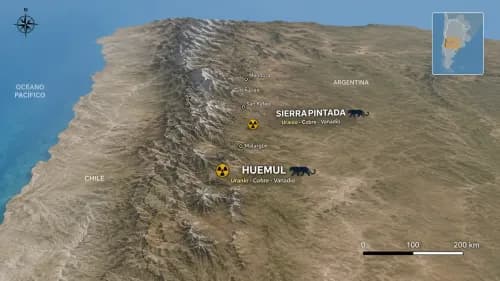
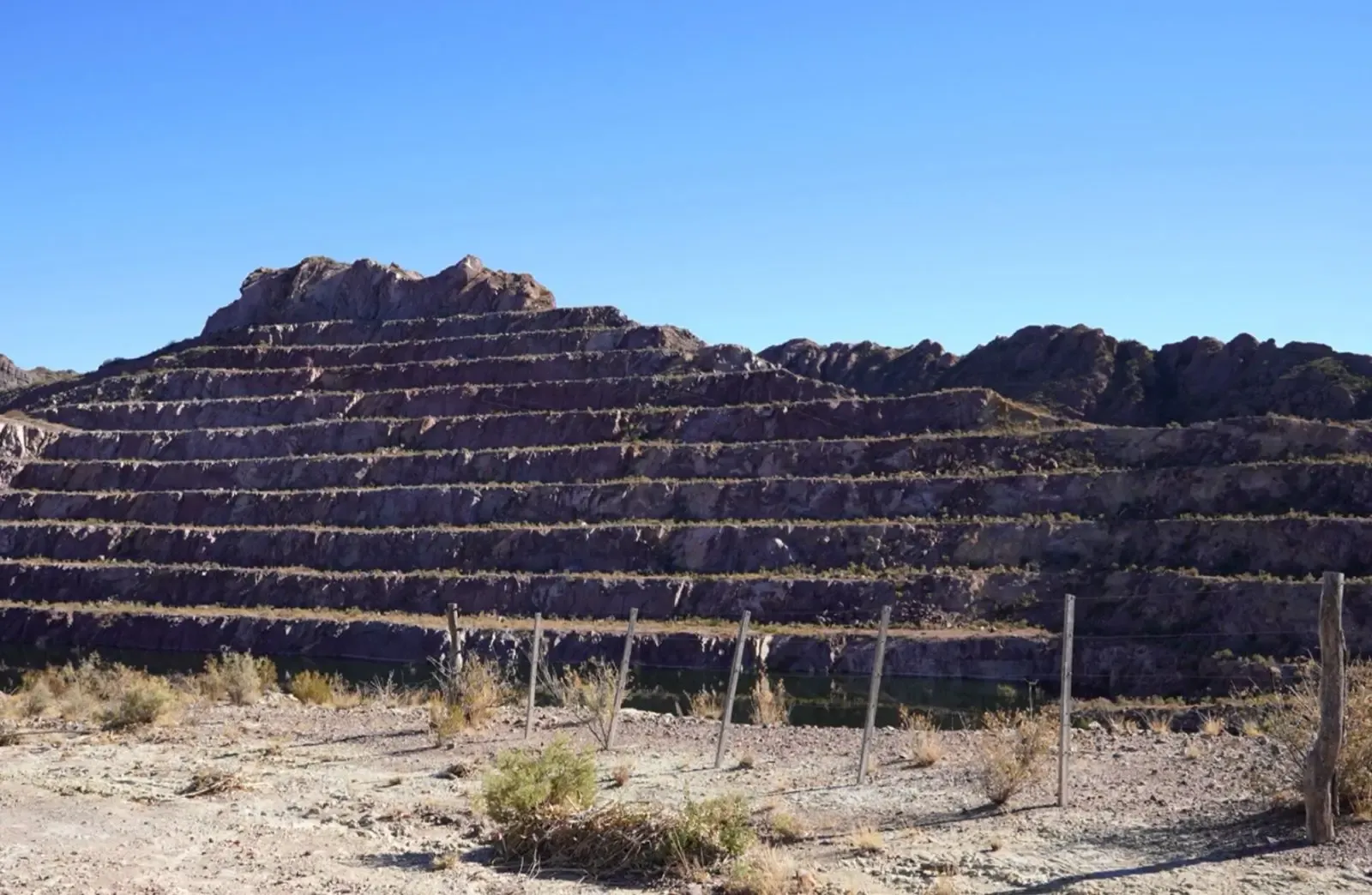
In this context, Sierra Pintada occupies a different position compared to other private initiatives currently advancing through exploration or economic evaluation. Between 1975 and 1997, the complex produced approximately 1,600 tonnes of uranium, equivalent to about 20% of the deposit's estimated total resource, which is still considered the largest known uranium deposit in the country. In addition, it retains one key advantage: its infrastructure.
The complex currently includes a refurbished Uranium Processing Plant, the construction of Cells 4 and 5, a balancing pond, the DN 8-9 final disposal facility, infrastructure for treating sludge and effluents from the DN3 impoundment, a radium and arsenic treatment plant under development, and 2.6 kilometres of water pipelines.
It also holds a Long-Term Shutdown License granted by the Nuclear Regulatory Authority (ARN), a regulatory instrument that allows the site to maintain operational conditions while advancing the environmental commitments established under its permits.
The current remediation program focuses on quarry water treatment through a system designed to progressively reduce uranium, radium and arsenic concentrations, with final disposal in facilities lined with double HDPE membranes and equipped with leak detection systems.
Progress on the Private Front
Activity is also increasing within the private sector. Blue Sky Uranium continues advancing the Ivana deposit, part of the Amarillo Grande Project in Río Negro, currently one of Argentina's most advanced uranium developments, with a Preliminary Economic Assessment already completed. At the same time, Jaguar Uranium is conducting new exploration campaigns in both Mendoza and Chubut, seeking to establish itself within a new generation of nuclear fuel-related assets.
This scenario is placing renewed pressure on the national government. As private companies move forward and the need to rebuild domestic capacity in a mineral considered strategic becomes increasingly evident, Sierra Pintada emerges as the State's most concrete initiative. Unlike those projects, the Mendoza complex already has a production history, installed infrastructure, regulatory licensing and an active environmental remediation program.
In this context, Sierra Pintada offers more than geological potential. It also represents the possibility for the State to once again play a direct role in uranium production and its integration into Argentina's nuclear value chain, at a time when supply security and energy geopolitics have returned uranium to the center of the global discussion.
Remediation as the Prelude to a New Stage
Ramos Napoli went a step further by suggesting another possible interpretation:
“A potential return to production would make it possible to significantly accelerate the remediation of the existing environmental liabilities.”
This statement changes the historical logic surrounding Sierra Pintada. Until now, remediation meant closing a chapter. Under this new perspective, remediation and production could begin to form part of the same equation.
The official also linked this possibility to Argentina's industrial capabilities.
“Argentina has 76 years of nuclear development and has built unique technological capabilities to add value to uranium.”
Along these lines, he highlighted the country's capacity to produce uranium dioxide and uranium hexafluoride as a competitive advantage for integrating into international supply chains at a time when nuclear energy is regaining importance due to energy security concerns and growing global demand.
Mendoza's Perspective
From the provincial government, Minister Jimena Latorre emphasized the technical and environmental continuity of the process. She stated that remediation “continues to move forward” and stressed that coordination between Mendoza and the national government has allowed work to regain momentum on the commitments established under the Environmental Impact Declaration (DIA) approved in 2019.
Latorre also recalled that the suspension of production was driven by economic rather than environmental factors, in a context very different from today's, with uranium prices, international demand and energy security once again at the forefront of global discussions.
This changing context is what is beginning to reposition Sierra Pintada. For now, it remains under remediation. But it is increasingly becoming part of the conversation about a future return to production.