From its Tortuguitas operations center, the company outlined investments in infrastructure, training and technical support to meet rising demand from mining, energy and construction. Germán Wilson said Argentina could multiply its mining exports in the coming years and stressed the need to accelerate talent development and supplier readiness.
By Panorama Minero
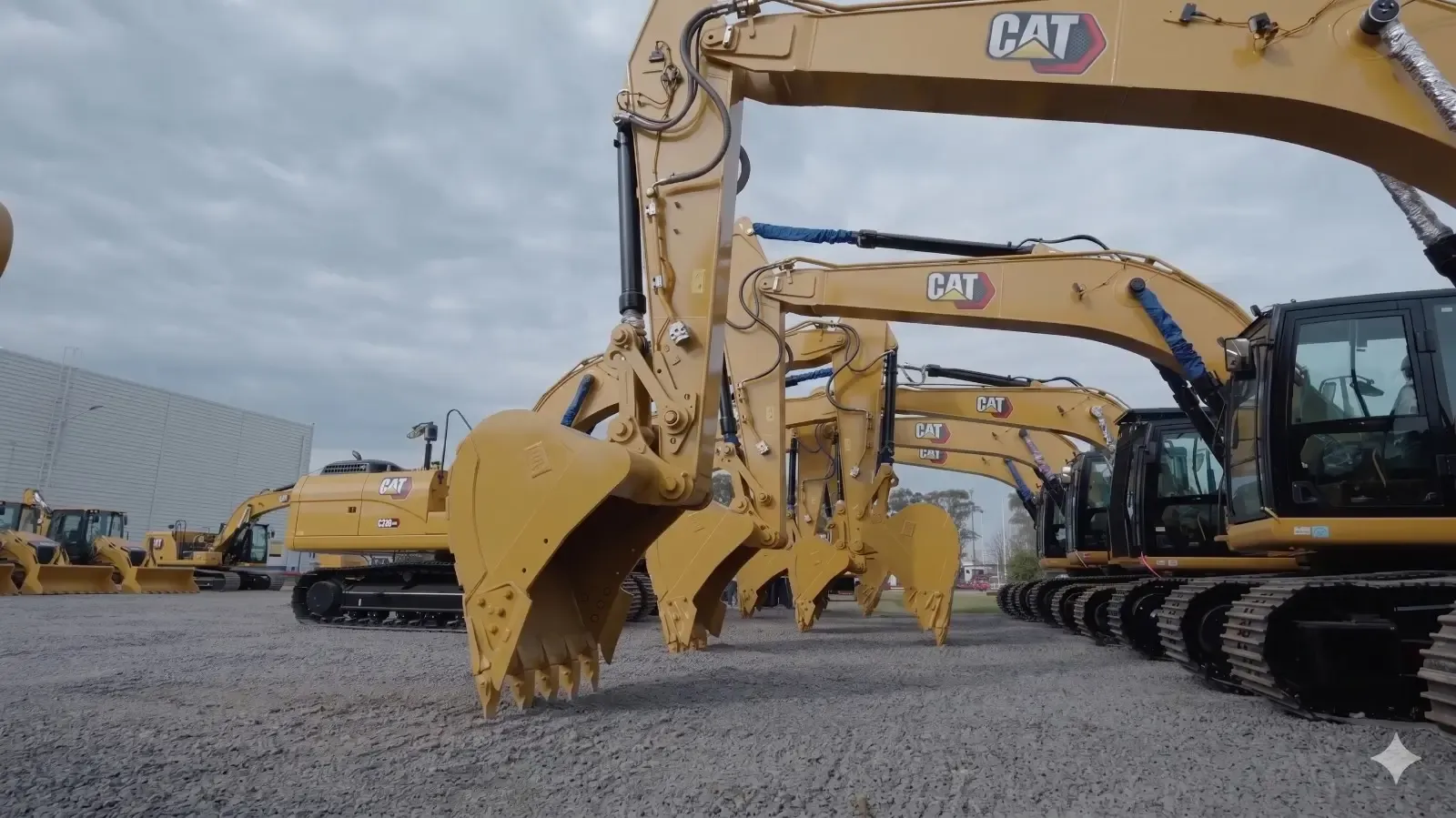
Argentina’s projected mining expansion is already reshaping the industry’s supply chain. Against this backdrop, Finning Argentina, Caterpillar’s dealer in the country, outlined a growth strategy focused on investment, technical capacity and talent development to meet demand from the next wave of mining and energy projects.
During a visit to the company’s facilities in Tortuguitas, Germán Wilson, Vice President of Operations and General Manager of Finning Argentina, said the country is still in an early stage of development, comparable to the first years of Chile’s mining expansion decades ago.
“Argentina’s mining industry currently exports around US$5 billion a year. There is potential to scale that figure to US$20 billion in a few years, and that is only a first stage,” he said.
Wilson said the main constraint will not be equipment availability, but the ability to build human resources, suppliers and specialized services. “Bringing in the equipment is the easy part. The real challenge is building the capabilities required to sustain the projected growth,” he added.
Finning currently has more than 650 employees in Argentina, eight branches, two component rebuild centers and four training centers. The company also manages an inventory of spare parts worth more than US$50 million and expects to increase it by around 20% next year to respond to higher activity levels.
The company expects to triple its business volume by 2030, supported by simultaneous growth in mining, Oil & Gas, power generation and construction activities linked to large-scale productive projects.
One of the main points raised by Wilson was the transformation facing the supplier base. According to him, the new mining cycle will require international standards in safety, productivity and technology, similar to those already applied in operations in Chile, Australia and Canada.
In this context, he highlighted the need to strengthen technical training programs and work with technical schools, provincial governments and suppliers to close capability gaps and accelerate the incorporation of specialized personnel.
“The opportunities are enormous, but they require preparation. This is the time to build capabilities before projects move massively into operation,” he said.
The company also confirmed that it is advancing new investments in infrastructure and training, particularly in mining provinces such as San Juan, where it is expanding capacity to support the next generation of copper projects.
For Wilson, the growth potential extends well beyond mining operations. “Mining has a multiplier effect across hospitality, food services, logistics, transportation, technical services, education and training. It is a much broader economic transformation than the mining operation itself,” he concluded.