Governor Gustavo Sáenz launched the Salta 2050 Plan and positioned mining, the energy transition, and export infrastructure as pillars of long-term economic growth. The province aims to consolidate its position as Argentina’s leading lithium-producing jurisdiction and as a key node within the NOA bioceanic corridor.
By Panorama Minero
With strong participation from public, private, academic, and productive-sector stakeholders, the Government of Salta launched the process to update its strategic planning framework through 2050. Within this framework, mining emerges as a central driver of investment, foreign exchange generation, and territorial transformation.
The launch of the Strategic Development Plan “Salta 2050” marked the beginning of a new phase of long-term planning for the province and reaffirmed the central role that mining will play in building an economic model focused on exports, the energy transition, and job creation.
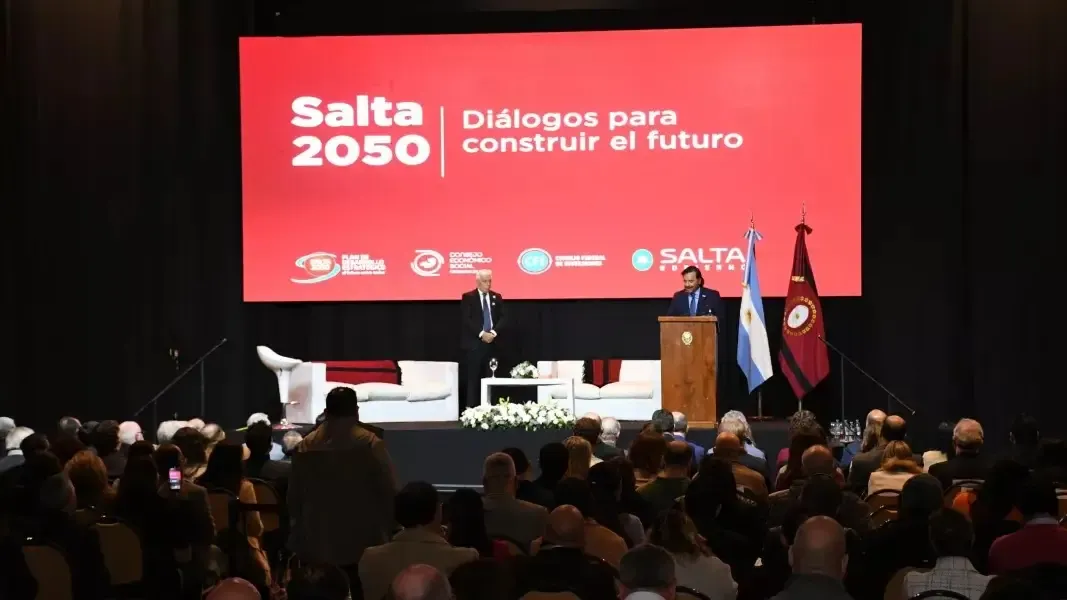
Led by Governor Gustavo Sáenz and the President of the Economic and Social Council of Salta, Hugo González, the participatory process entitled “Salta 2050: Dialogues to Build the Future” brought together representatives from the public sector, companies, universities, and intermediary institutions to define a development agenda that extends beyond political and economic cycles.
Governor Sáenz described the plan as “our social contract” and “the roadmap for an integrated, predictable, and leading Salta within the regional context,” emphasizing that predictability will be one of the key factors in consolidating long-term strategic investments, particularly in mining and energy.
Mining, Energy Transition, and Export Competitiveness
In his speech, the governor identified “Mining with Social and Environmental Value” as one of the structural pillars of the provincial development model through 2050.
“Salta must reaffirm its course with determination, prudence, and strategic vision,” stated the governor, stressing that the province seeks to consolidate its position as a relevant player in the production of clean energy and minerals linked to electromobility.
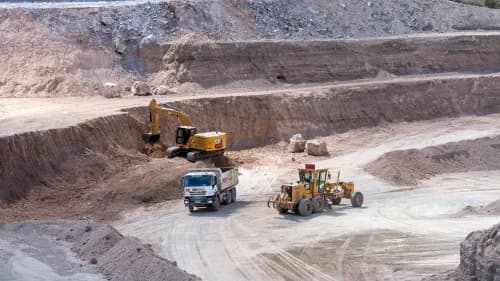
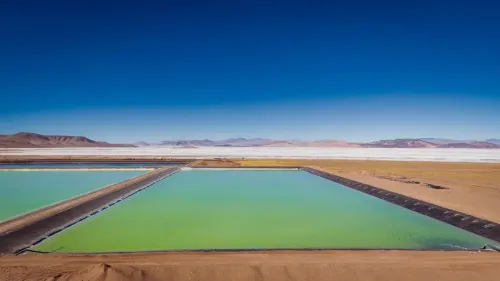
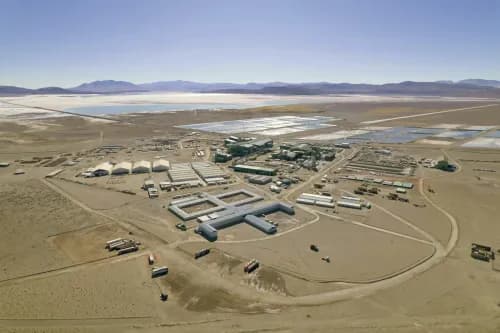
Sáenz also stated that the province “has the largest number of mining projects in the country” and anticipated that “we will soon become the province with the highest lithium production.” The statement comes amid the strong growth of mining activity in the Salta Puna, where national and international companies operate and develop projects in the Centenario-Ratones, Diablillos, Arizaro, and Pozuelos-Pastos Grandes salars, among others.
Lithium as a Strategic Vector
The province has also been strengthening strategic infrastructure linked to mining and logistics development, particularly along National Route 51 and the bioceanic corridor connecting Northwestern Argentina with Pacific ports in Chile.
These works are considered essential for reducing export costs and improving the competitiveness of mining projects located in the Puna region.
Long-Term Planning and Social License
One of the key aspects highlighted during the launch was the emphasis on building institutional and social consensus around provincial development.
The government stated that the 2050 Plan must become a state policy capable of sustaining strategic guidelines beyond individual administrations.
Within this framework, the concept of “Mining with Social and Environmental Value” aligns with a growing trend within the industry: integrating economic competitiveness, environmental sustainability, and community development as necessary conditions to secure the social license of mining projects.
Hugo González, President of the Economic and Social Council, stated that the 2050 Plan “will not be just another document,” but rather a tool designed to guide long-term public policies. He also emphasized that multi-sector dialogue will serve as the foundation for addressing the challenges of a province seeking to position itself as a strategic hub in northern Argentina.
An Update to the Provincial Development Model
The initiative updates the planning process originally launched in 2009 through the Salta 2030 Plan and later revised in 2018.
The new version incorporates variables that are now considered decisive for regional economies: energy transition, the knowledge economy, logistics infrastructure, sustainability, and international competitiveness.
Within this context, mining is presented not only as an extractive activity, but also as one of the main drivers of foreign exchange generation, private-sector employment, and investment for the province.
The challenge outlined by Salta 2050 will be to transform that geological potential into a sustainable territorial development process, supported by public-private cooperation and long-term planning capacity.